
How Vehicle Recognition Is Getting Smarter (and Why That Matters)
Traditional vehicle recognition systems have gone beyond just reading license plates; they’re now identifying make, model, color, and even “generation” of vehicles in real-time, at the edge or in the cloud. What this means is better security, smarter parking and traffic systems, and new demands on infrastructure and privacy.
Why this matters now
Parking lots, EV stations, gated communities and cities are under pressure to operate more efficiently, and identifying which vehicle is arriving or leaving gives a major operational edge.
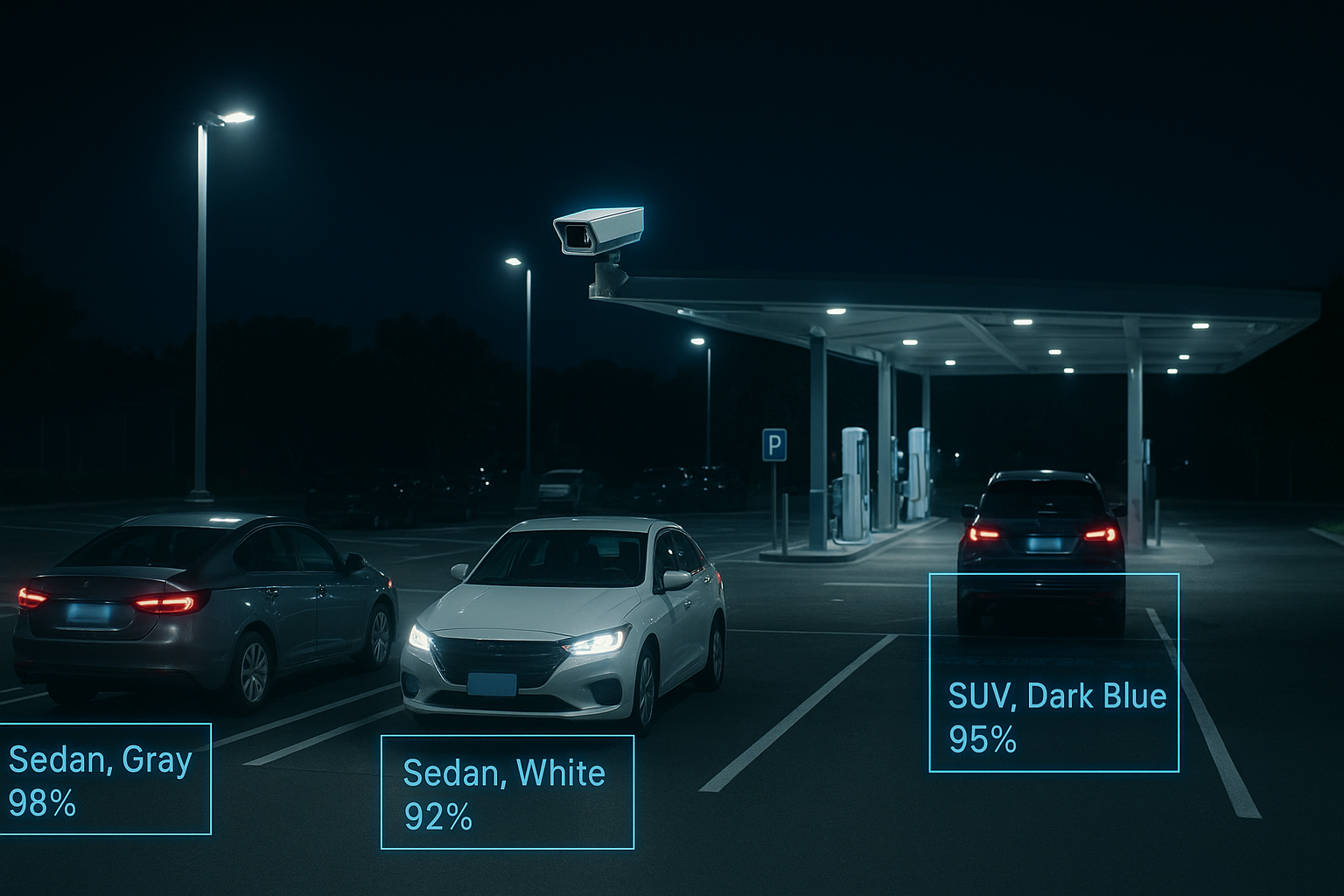
Traditional ALPR (automatic license plate recognition) systems hit accuracy walls in low light, varying plate designs or international regions. The smarter systems built on deep-learning and edge compute now overcome those limitations.
With smarter recognition comes elevated expectations: you now need fewer “false positives”, you need broader context (not just plate number), and you need actionable insights rather than passive logs.
What the “next-gen” vehicle recognition systems do
Beyond just reading plates
Modern systems like Sighthound’s ALPR+ deliver:
License plate detection + recognition (alphanumeric).
Vehicle make, model, color and generation (MMCG).
Object tracking and situational context (vehicle orientation, movement direction).
Edge deployment, CPU and GPU options, Docker containers and cloud/edge hybrid architectures.
Why this is big
If a plate is missing or obscured, the system still identifies the vehicle by other attributes. Example: a vendor’s legacy LPR system dropped to ~15 % accuracy when a state changed their plate design, but when the vendor switched to Sighthound ALPR+, accuracy climbed above 90 %.
Global deployment becomes viable. Recognising plates across multiple countries is still hard, but recognising vehicle MMCG has fewer regional constraints.
Operational benefits:
Parking: automate entry/exit, enforce reserved/EV spots, reduce staffing.
Security: identify black-listed vehicles, trigger automated response.
Smart cities/traffic: monitor vehicle flows, manage tolls, enforce access zones.
How the technology has improved
Deep learning & large datasets
Early research from Sighthound (2017) showed deep convolutional neural networks trained on millions of vehicle images outperformed prior methods for make/model/colour recognition.
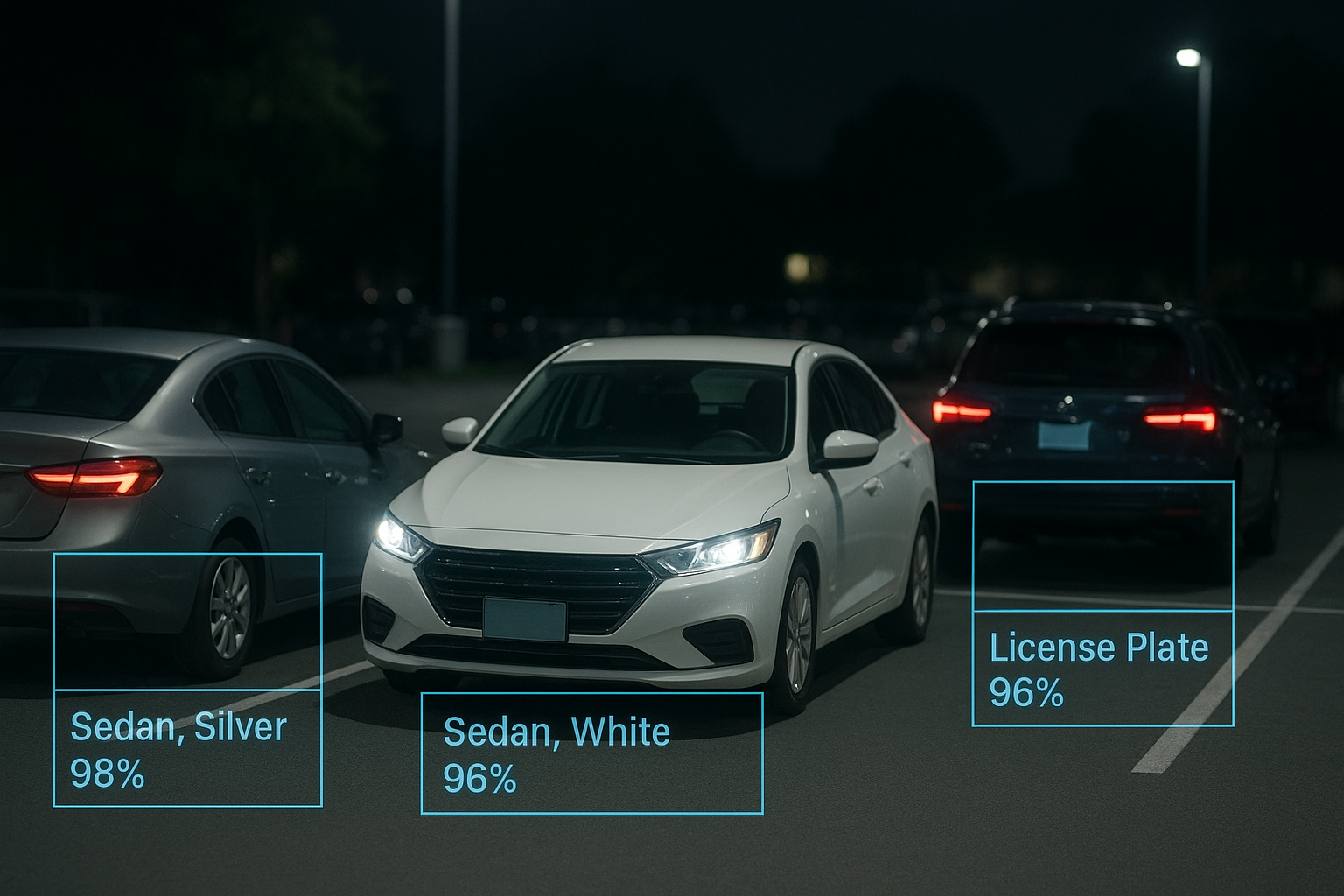
In license plate recognition, work on YOLO-based detectors achieved ~93.5 % recognition rate in test sets, outperforming older commercial systems.
Edge computing & deployment flexibility
Recognising the latency and bandwidth demands of streaming full-motion video to the cloud, Sighthound offers deployment on edge devices, on-prem servers or cloud, enabling real-time response and scalability.Improved camera hardware + analytics pipeline
Better ROI (region of interest) selection, higher resolution sensors, IR/low-light support, and advanced analytics mean systems perform well even in sub-optimal conditions.Contextual intelligence
Instead of only plate number -> result, the platform considers vehicle type, direction, speed (in some cases), and then triggers actions (gate open, alert, parking charge) based on business logic.
Use-cases that benefit most
| Industry | Example scenario | Value created |
|---|---|---|
| Parking & Access Control | A gated apartment complex uses ALPR+ to recognize resident vehicles and automatically open gates—even when plates are missing or tampered. | Better resident experience and tighter security. |
| EV Charging Stations | Vehicles are identified on arrival, linked to an account, and charging sessions start automatically. | Reduced friction, higher throughput, better asset utilization. |
| Law Enforcement & Smart Cities | Blacklisted vehicles are detected, traffic flow is monitored, and watch-lists are integrated in real time. | Faster response times and improved mobility management. |
| Retail & QSR + Curb-side Pickup | Arriving vehicles are recognized, linked to loyalty programs, and curb-side service is triggered automatically. | Improved customer experience and operational efficiency. |
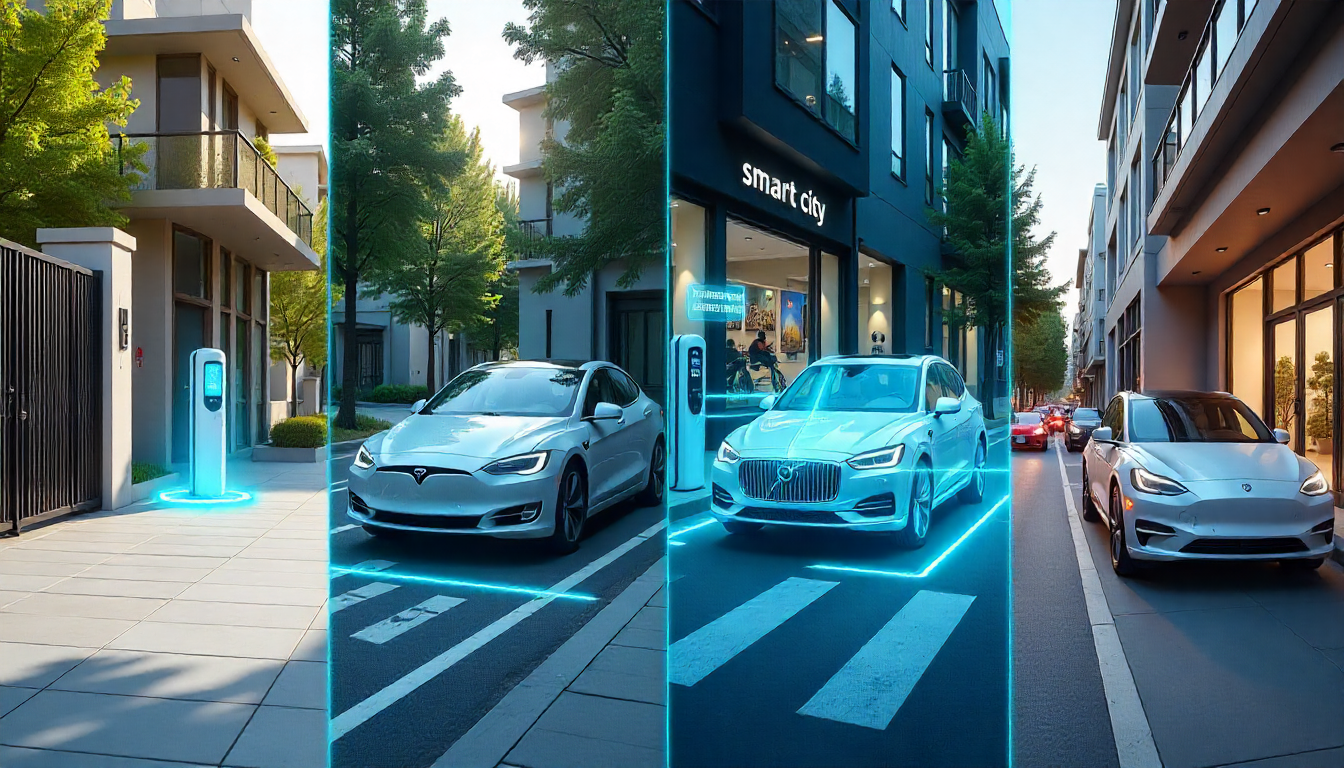
Example: A parking vendor noted that their previous system only delivered moderate accuracy when plate formats changed. After switching to ALPR+, they achieved consistent accuracy above 90% for vehicle make/model recognition, even when plates weren’t reliably readable.
Why Sighthound ALPR+ stands out
Supports detection of vehicle license plates and full vehicle analytics (MMCG).
Proven real-world accuracy and use in business contexts.
Flexible deployment architecture: edge, on-prem, cloud, Docker.
Works with Sighthound’s own hardware like the Compute Node or Compute Camera (optional) to optimize imaging and edge-AI performance.
Watch-outs & Things to Consider
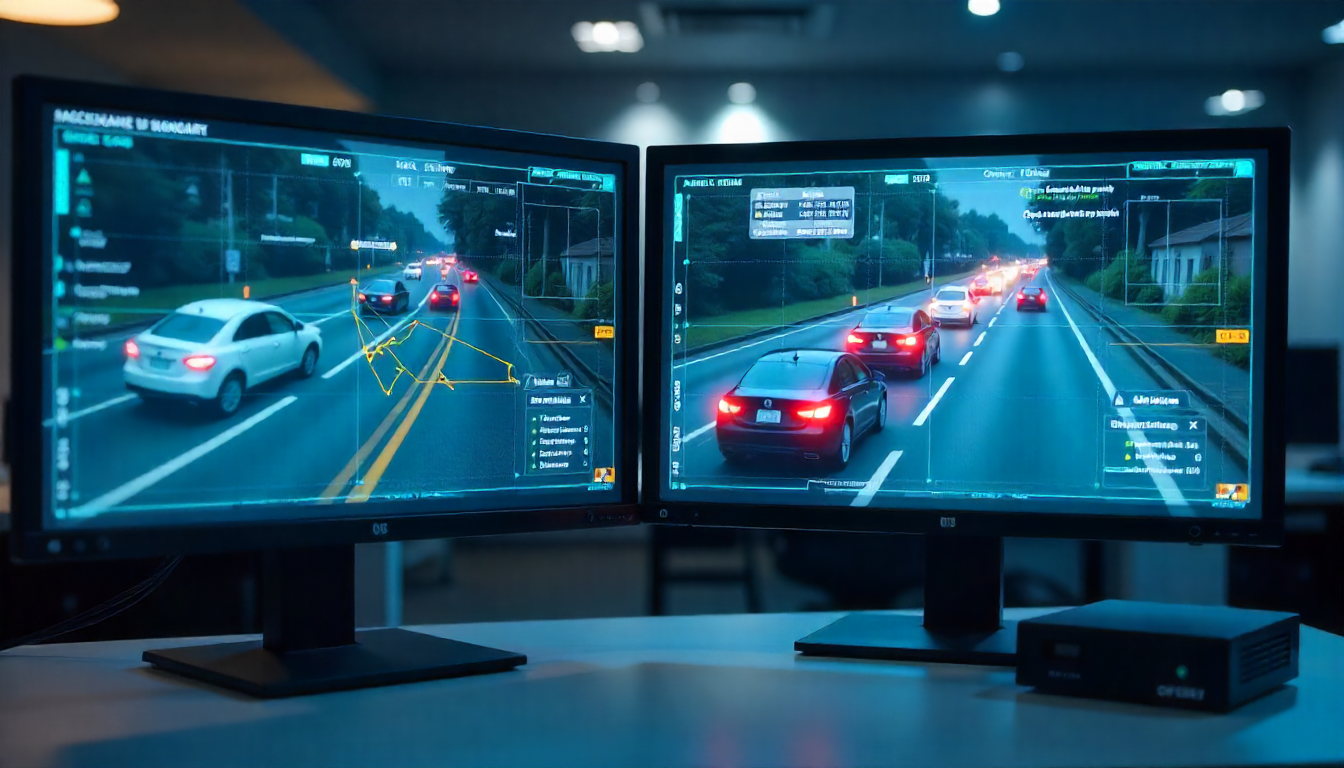
Camera placement and setup matter: The best algorithms cannot compensate for bad lighting, incorrect angle or sub‐par resolution. Many community members noted high CPU usage, slow detection or mis-reads when the feed was 4 MP@15 fps and there was heavy glare or IR interference.
Accuracy claims = “in optimal conditions”: Vendors say “over 95% accuracy” but that assumes ideal lighting, plate visibility, and controlled angle. Real-world conditions will vary.
Privacy, legal and compliance issues: With richer vehicle data (make/model/color), the risk of misuse increases. Operators must define retention policies, data security and legitimate use. For example, redaction may be required for GDPR contexts.
Region/country variation: While MMCG recognition helps, some vehicle models or plates are region-specific, so global coverage may still vary. Sighthound notes their MMCG models are primarily trained for US/Canada/EU markets.
Cost & infrastructure implications: Better cameras, edge hardware (such as Sighthound Compute Node), and integration all mean higher upfront investment, even if ROI is strong.
What to do next
Here’s a concrete checklist to move forward:
Define your use-case: Are you looking at parking/EV charging, OR law enforcement, OR retail curb-service? The requirements differ (speed, throughput, accuracy).
Evaluate your infrastructure: Check current cameras—resolution, illumination, angle and feed latency. Determine whether you will deploy at the edge, on-prem, or cloud.
Engage with Sighthound: Request a demo of ALPR+ in your environment (with your camera feed if possible) and evaluate:
Plate + vehicle analytics accuracy (MMCG)
Real-time latency
Integration with your current VMS/ACS/toll system
Resource usage (CPU/GPU) and scalability
Pilot & measure: Run a trial for a selected zone. Measure metrics like detection accuracy, false positives, event/alert latency, throughput, processing load.
Plan for scale and compliance: Build a roadmap for full deployment: hardware upgrade, edge vs cloud decisions, data retention, redaction, and privacy policies.
Final thought
The shift is clear: License plate recognition alone is no longer enough. Today’s vehicle recognition systems must deliver full context (make, model, color, generation, etc.) and do it in real-time. For organisations managing parking, access control, smart city ramps or curb-side retail, that extra dimension of insight will drive efficiency, safety and profitability. If you’re still using basic LPR today, you’re likely leaving value on the table.
Ready to see how it performs in your environment? Try out this online demo of ALPR+ and test it against your real-world flows, your pipes of traffic, your unique challenges.
Want to see Sighthound ALPR+ in action? Watch this short demo.
For business opportunities, explore our Partner Program today.
FAQ Section:
-
MMCG stands for Make, Model, Color, and Generation. Modern ALPR systems now go beyond reading license plates and recognize detailed vehicle characteristics, which improves accuracy, especially when plates are obscured or missing.
-
Edge AI allows vehicle recognition tasks to happen directly on local devices (e.g., Sighthound Compute Node), reducing cloud reliance, lowering latency, and preserving privacy. This leads to faster decisions and better uptime.
-
Yes. Advanced systems use computer vision to identify vehicles by MMCG data even when the plate is unreadable, helpful for obscured, swapped, or missing plates.