
The Ultimate Guide to ALPR Deployment in Parking Facilities
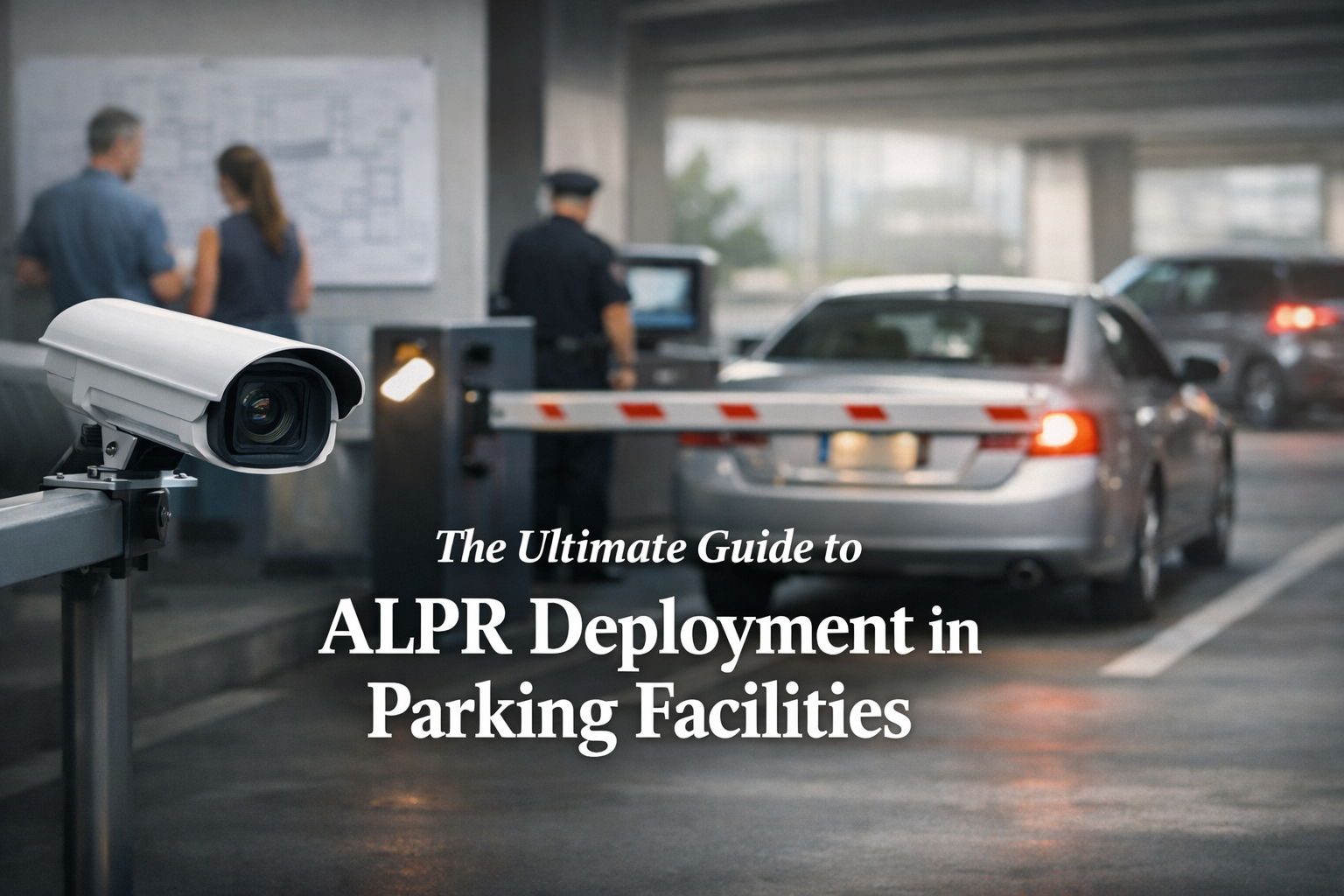
Automatic license plate recognition (ALPR) deployment in parking can fail when lanes, cameras, policies, and access workflows are planned as separate projects. A better plan ties plate capture to parking access control, payment review, permit logic, and privacy controls before installation starts. This guide gives operators a practical path from site planning to review.
Planning note: Treat every plate read as a decision point: access, payment, permit validation, security review, or manual exception handling.
TL;DR
- Start with the lane decision. Then plan the camera view, lighting, and system handoff.
- Treat ALPR as a workflow. Parking lot license plate recognition should support access, payment, permit, security, and review steps.
- Set privacy controls early. Define retention, access, notice, and review before vehicle data is collected.
- Use real traffic for acceptance. Validate reads with normal queues, glare, rain, night traffic, and edge cases.
- Plan for scale only after proof. Sighthound ALPR+ achieves typical plate-read accuracy above 95%, but each facility still needs field validation.
Key Takeaways
- Document every path. Map each entry, exit, permit, exception, and manual review route before rollout.
- Test camera placement in the field. Day, night, glare, rain, tailgate height, and queued vehicles all affect the review frame.
- Separate operational and investigative access. Gate staff and security reviewers usually need different permissions.
- Build around the parking stack. ALPR should hand off cleanly to access control, payment, permit, and review systems.
- Keep an exception process. Obscured plates, temporary plates, damaged tags, and tailgating need staff instructions.
What is ALPR deployment in parking facilities?
A parking facility ALPR project starts with a simple question: what decision should a plate read support? The answer may be access approval, payment matching, permit validation, security review, or post-event investigation. Good planning keeps those decisions separate, so your team can audit each workflow later.
For background on the category, review Sighthound’s guide to automatic license plate recognition. Use that foundation, then narrow the project around lanes, gates, pay stations, enforcement routes, and operator review points.
A parking facility ALPR plan should list every place a vehicle enters, exits, waits, reverses, or changes direction. That map helps integrators decide where the plate should be captured and where staff need a fallback path. Operators often want faster entry and exit without asking every driver to stop for a paper ticket or lane attendant.
Key point: Sighthound ALPR+ supports license plate region identification for US, Canada, and EU formats.
ALPR deployment in parking also needs ownership. Assign one owner for lane hardware, one for parking software, one for privacy review, and one for field acceptance. If your facility uses electric vehicle (EV) charging, permits, or mixed-use access, include those stakeholders early and review Sighthound’s parking and EV solutions.
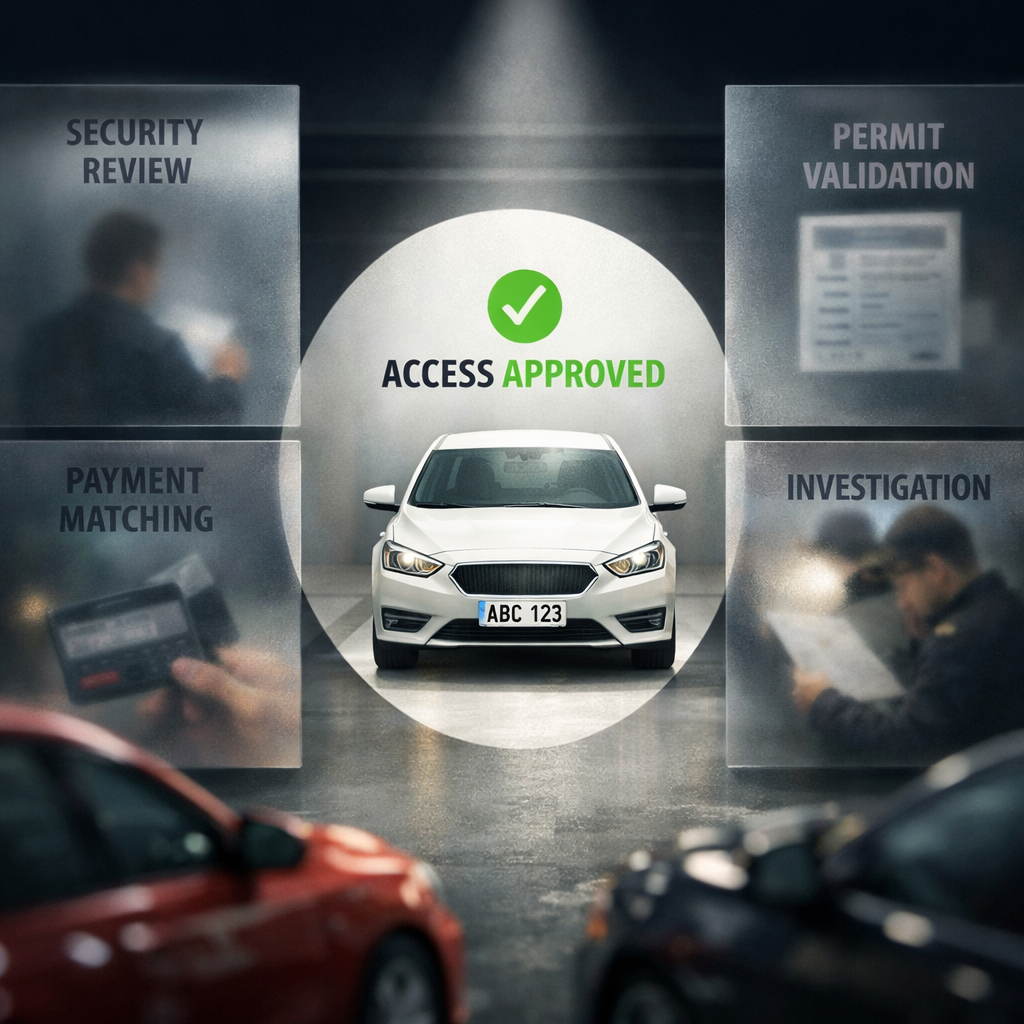
Lane-level capture planning should account for plate angle, lighting, queue distance, and a fallback review path.
How should parking teams design lane capture?
Start with the lane, not the camera model. Stand where the vehicle will be when the plate should be read. Check the likely plate angle, headlight glare, tailgate height, queue distance, and whether a vehicle can block another vehicle’s plate.
Use numbered field checks during the site walk:
- Mark the expected capture point in each lane.
- Confirm whether the plate is front-facing or rear-facing.
- Record the sun angle during morning and evening traffic.
- Test the lane during normal queue conditions.
- Save sample frames from each camera position.
- Review unreadable frames before mounting hardware permanently.
For parking lot license plate recognition, the goal is repeatable capture under ordinary facility conditions. The review frame should show the plate clearly, with enough context to resolve disputes. If a human cannot read the plate in the frame, your team should treat that as a lane design issue before blaming downstream systems.
Key point: Sighthound ALPR+ reaches above 90% accuracy in almost all real-world scenarios.
How should ALPR connect to parking access control?
ALPR should connect to the decision points that already run the facility. Build a matrix that links each plate read to access control, permits, payment review, validation, security alerting, or manual review. Buyers often need a clear answer on where ALPR connects before they approve lane work.
For parking management with ALPR, define the handoff before installation. A plate read may need to open a gate, match a monthly parker, flag an exception, or attach a vehicle event to a transaction. Keep the handoff narrow at first, then add more workflows after acceptance testing.
| Plate read outcome | Parking decision | Review owner |
|---|---|---|
| Permit match | Allow access or validate session | Parking operations |
| Payment mismatch | Send to payment review | Parking operations |
| Blocked or unreadable plate | Send to manual review | Lane attendant or supervisor |
| Security match | Route through approved security procedure | Security reviewer |
Avoid treating every exception as a failure. Some events should go to review, including unreadable plates, mismatched permits, blocked views, or vehicles that tailgate through a gate. Your operator screen should make those cases easy to triage, because staff need to know what to do when automation pauses.
Use this rollout sequence:
- Run ALPR in observation mode first.
- Compare plate reads against known transactions.
- Review false matches and missed reads daily.
- Fix lane capture issues before changing policy.
- Add gate actions after the review team signs off.
- Keep manual override steps documented for staff.
What privacy and compliance controls should be planned?
Privacy planning should start before the first plate sample is collected. A useful plan covers retention, access control, notice, encryption, audit review, vendor review, and deletion procedures. Compare your planned controls with the National Institute of Standards and Technology Privacy Framework during policy review.
Keep the policy practical. State what data is collected, why it is collected, who can access it, how long it is retained, and how exceptions are handled. Review public-facing notices against Federal Trade Commission privacy and security guidance before launch.
Parking teams should also separate operational access from investigative access. Gate staff may need to resolve a current parking session, while security staff may need a different review path. That separation helps limit casual lookup and keeps your audit trail easier to review.
A simple privacy checklist can guide your launch:
- Define the permitted uses for plate reads.
- Set retention periods by workflow.
- Restrict access by staff role.
- Log administrative searches.
- Review signage and notice language.
- Encrypt stored and transmitted records.
- Schedule policy review after launch.
Legal and compliance teams often worry about keeping more vehicle data than the operation needs. Treat that concern as a design input. Shorter retention, narrower access, and clear deletion steps can reduce avoidable exposure.
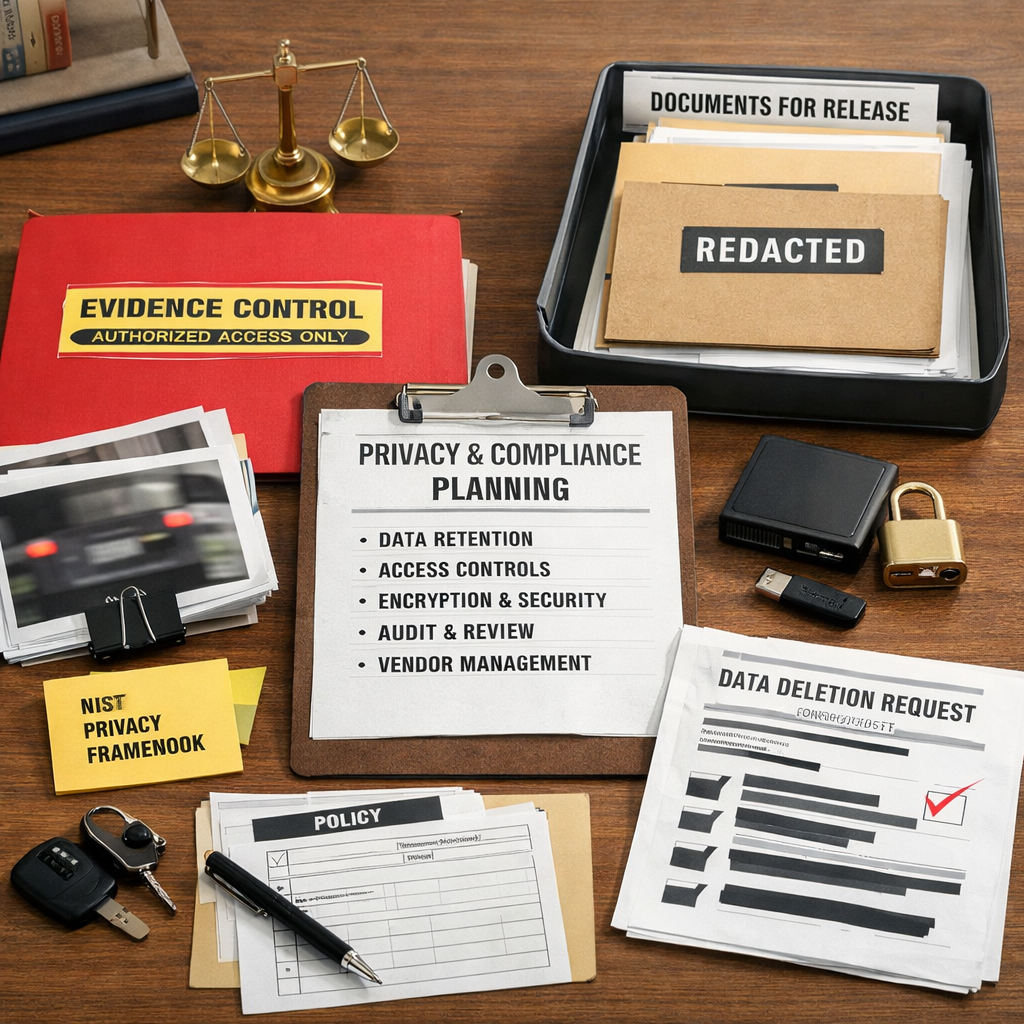
Privacy planning should define retention, role access, signage, encryption, review, and deletion before launch.
How Sighthound ALPR+ helps
Sighthound ALPR+ is AI-powered software for license plate recognition with vehicle make, model, color, and generation (MMCG) analytics and be-on-the-lookout (BOLO) alerts. That product scope matters in parking facilities where a plate read may need extra vehicle context during review.
Sighthound ALPR+ runs on Windows 10+, Linux kernel 5.x+, and embedded Linux, and it is hardware-agnostic across graphics processing unit (GPU), central processing unit (CPU), edge, and cloud deployments. Sighthound ALPR+ processes up to 160 frames per second on GPU.
Key point: Sighthound ALPR+ processes up to 160 frames per second on GPU.
Sighthound Compute is a line of edge AI hardware, including smart cameras and compute nodes, that runs Sighthound's ALPR+, Vehicle Analytics, and Redactor stack locally. Sighthound Cameras are IP67-rated, heat-resistant, and powered by Power over Ethernet Plus (PoE+) under IEEE 802.3at.
Sighthound Compute Node ingests Real Time Streaming Protocol (RTSP) streams from existing network cameras and runs Sighthound's computer-vision stack on top. For deeper vehicle attributes, review Sighthound’s guide to make, model, color, and generation analytics.
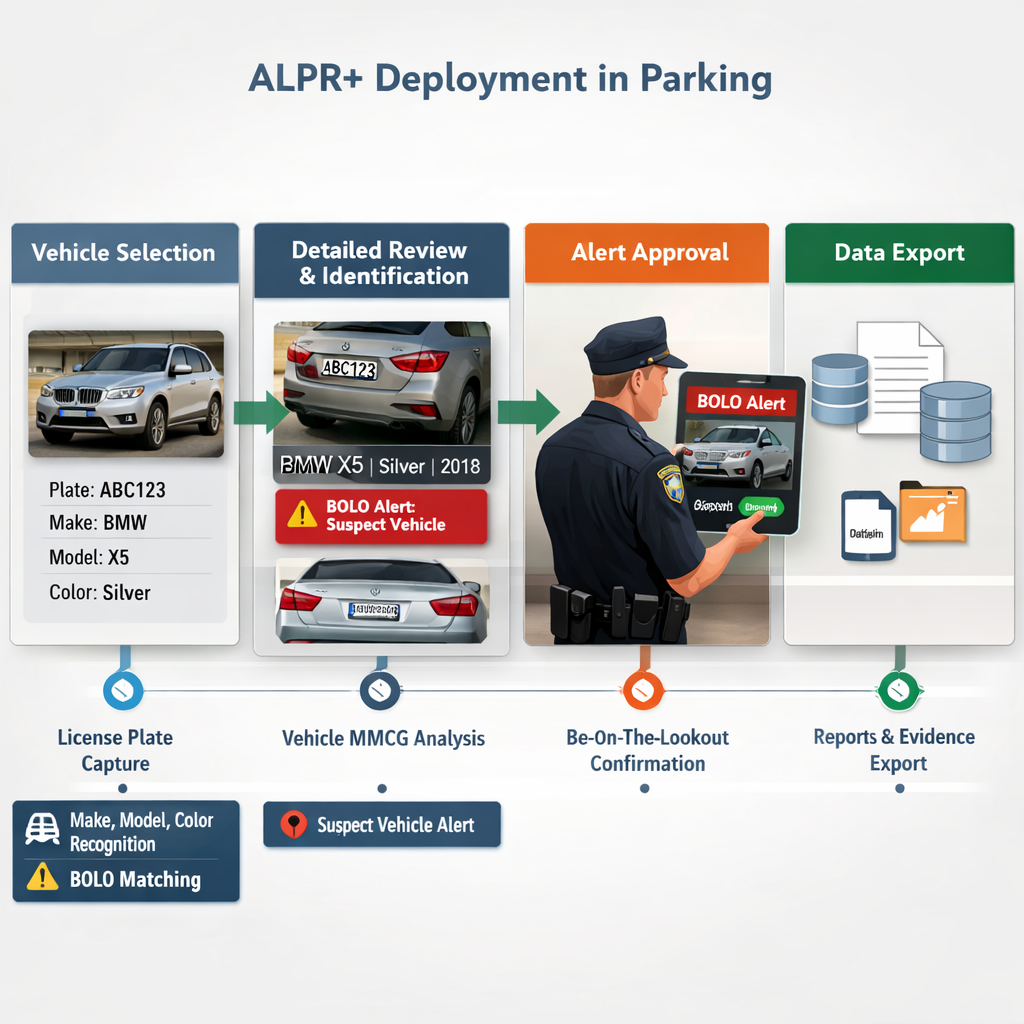
A production workflow connects lane reads to operator review, parking access, and live exception handling.
Deployment checklist for your facility
Use a written checklist before issuing a purchase order. This keeps facility operations, information technology, security, and compliance teams aligned around the same acceptance criteria.
- Define each entry and exit workflow.
- List permit, visitor, payment, and enforcement use cases.
- Map each camera to a specific lane decision.
- Capture test frames in normal and difficult conditions.
- Confirm system handoffs with the parking platform owner.
- Write exception handling steps for staff.
- Approve retention, access, and notice policies.
- Run observation mode before gate automation.
- Review results with operators and integrators.
- Expand only after the first lanes meet acceptance criteria.
The first rollout should be small enough to inspect closely. One entry and one exit lane can reveal camera placement issues, policy gaps, and operator training needs. After that review, expand to more lanes with the same checklist instead of redesigning each area from scratch.
Legal Disclaimer
This article provides general planning information for parking operators and integrators. It is not legal advice. Consult qualified counsel before deploying ALPR, setting retention periods, creating public notices, or using vehicle data for enforcement, security, or investigative purposes.
Sources
- Sighthound ALPR+ product page
- Sighthound parking and EV solutions
- National Institute of Standards and Technology Privacy Framework
- Federal Trade Commission privacy and security guidance
- Fortune Business Insights automatic number plate recognition system market report
FAQ
What is the first step in ALPR deployment in parking?
Start by mapping the lane decision. Decide whether the plate read supports access, payment, permit validation, security review, or manual exception handling. Then test camera positions against that decision before permanent installation.
How accurate is Sighthound ALPR+?
Sighthound ALPR+ achieves typical plate-read accuracy above 95%. Field results still depend on readable frames, so test camera placement before scaling.
Can ALPR work with existing parking cameras?
Sighthound Compute Node ingests RTSP streams from existing network cameras and runs Sighthound's computer-vision stack on top. Review camera views before assuming every existing camera is positioned for plate capture.
What privacy controls should a parking ALPR program include?
Plan retention limits, role-based access, public notice, encryption, audit logs, and deletion procedures. Review those controls with counsel and compare them with recognized privacy guidance before launch.
Why add vehicle make, model, color, and generation analytics?
Vehicle make, model, color, and generation (MMCG) analytics can add review context when a plate read needs verification. Sighthound ALPR+ includes vehicle make, model, color, and generation analytics.