
How ALPR Works (With Examples From Real Parking Lots & Patrol Cars)
It happens in the blink of an eye, literally.
A vehicle approaches a corporate parking barrier at 15 miles per hour. Before the driver can even reach for their window controls, the barrier arm lifts, and the car glides through without stopping. Miles away, a police cruiser moves through a crowded retail parking lot. The officer is focused on navigating the lanes, but a ruggedised laptop in the trunk is scanning hundreds of parked cars per minute. Suddenly, a red alert flashes on the dashboard: "STOLEN VEHICLE: SILVER CAMRY." The officer hits the brakes, verifies the screen, and initiates a stop.
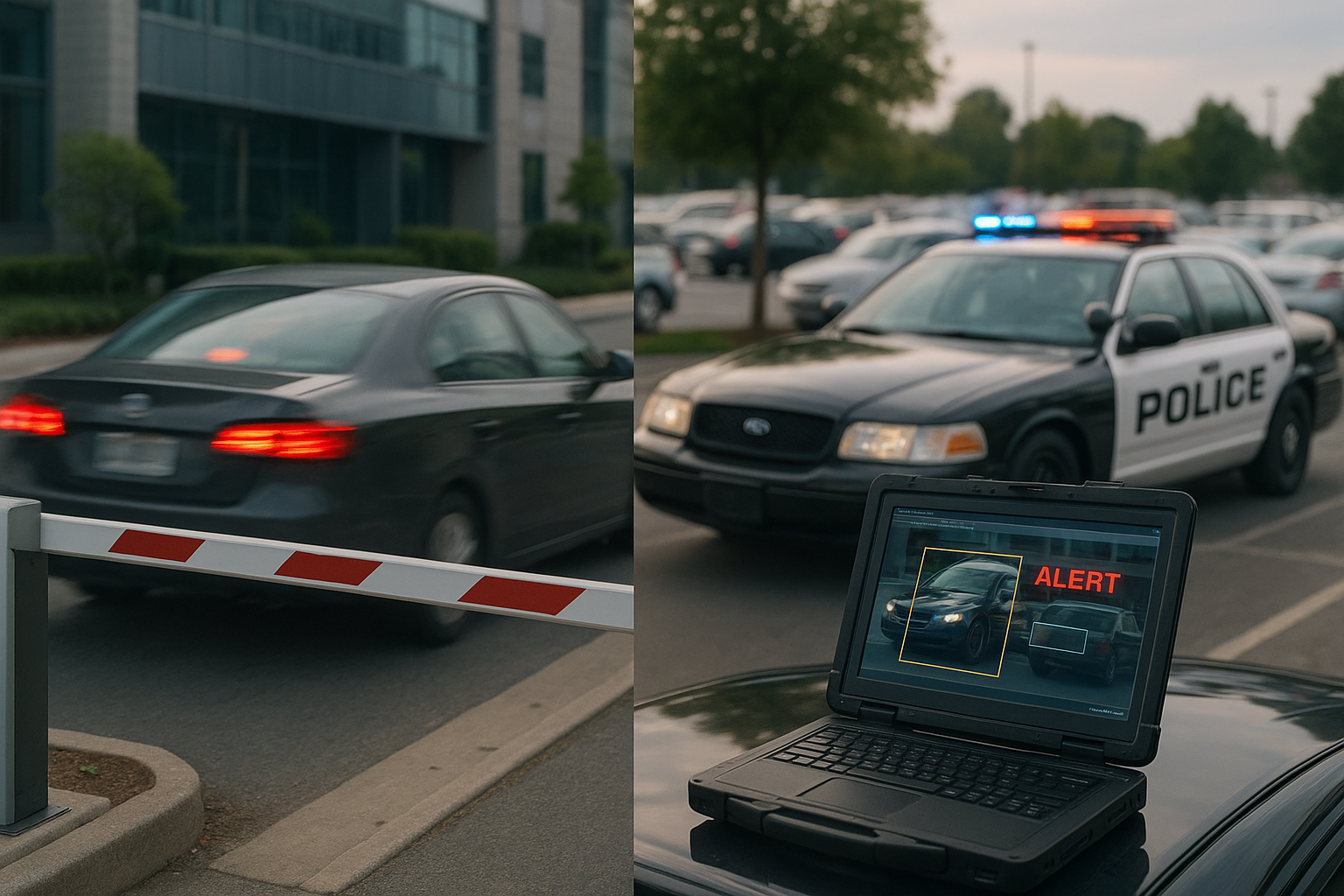
To the average observer, these moments feel like simple automation magic, even. But to a developer, a security integrator, or a facility manager, they represent a precision-engineered workflow of Automatic License Plate Recognition (ALPR).
For decades, ALPR (also known as ANPR or LPR) was a clumsy technology. It relied on expensive, proprietary hardware and rigid "template matching" software that failed the moment a license plate was dirty, dented, or viewed from a sharp angle. It was a tool for the few who could afford it, and even then, it was often frustratingly inaccurate.
Today, the "intelligence" has decoupled from the hardware. Modern ALPR, like Sighthound ALPR+, utilises deep learning and advanced computer vision to perform inference at the edge. It doesn't just "read text"; it understands the vehicle. It can distinguish a bumper sticker from a license plate. It can tell the difference between a "0" (zero) and an "O" (Oscar) based on state-specific syntax. Most importantly, it can identify the vehicle's make, model, color, and generation (MMCG), providing a layer of verification that old-school optical character recognition (OCR) could never dream of.
Let’s tear down the "black box" of ALPR. We will walk through the exact software pipeline that processes a video frame in under 50 milliseconds. We will dissect the JSON data structures that developers use to build these systems. And we will explore two detailed real-world environments, the Ticketless parking garage and the mobile police cruiser to show you exactly how this technology functions in the wild.
"Modern ALPR isn't just about reading a license plate; it's about understanding the entire vehicle context in milliseconds."
The 4-Stage "Inference Pipeline"
When a camera "sees" a car, it is really just capturing a stream of raw pixel data, millions of red, green, and blue dots shifting 30 times a second. The magic of ALPR is the software pipeline that organises this chaos into structured information.
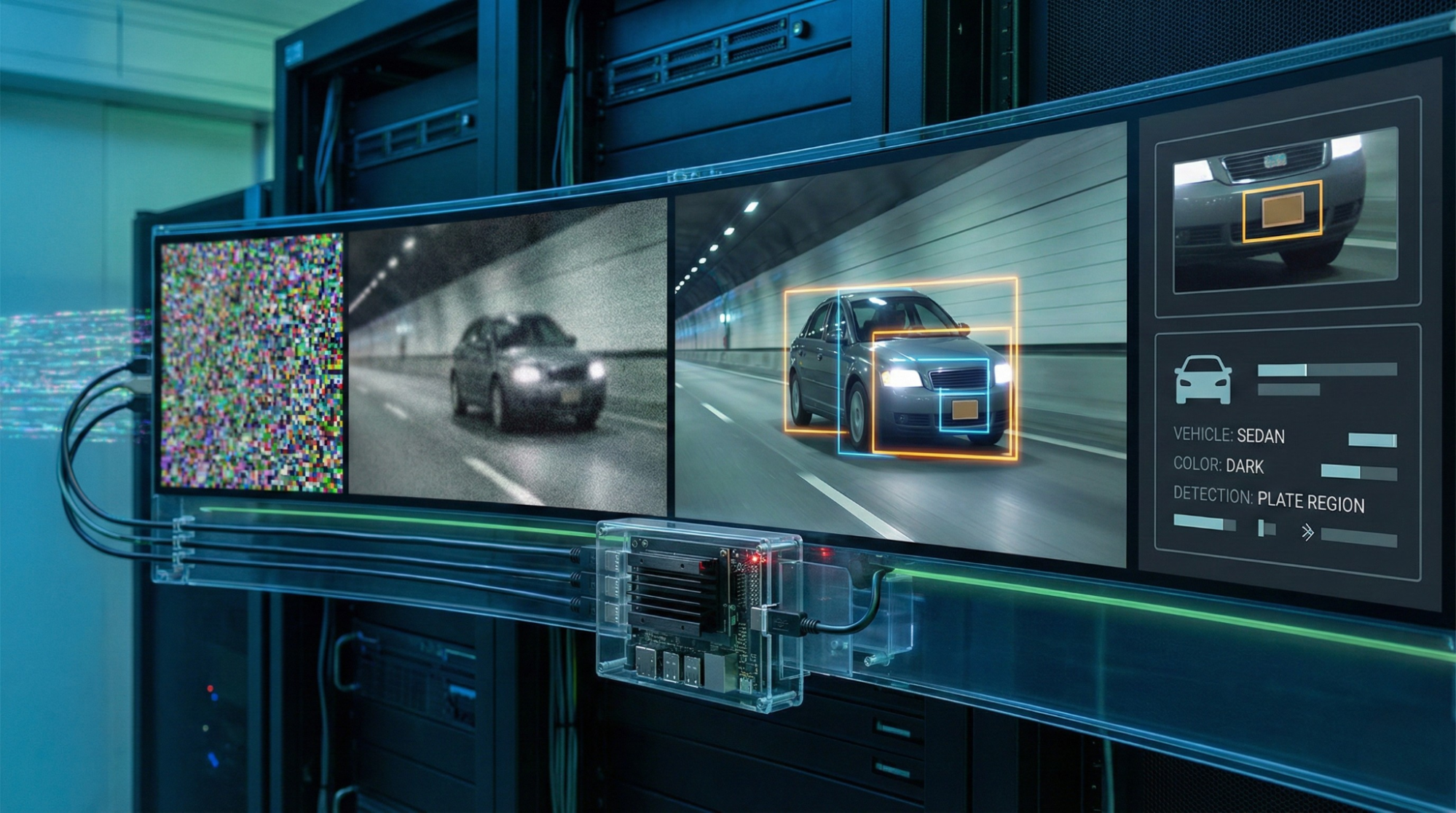
Unlike legacy systems that treated every frame as a standalone photograph to be scanned, modern AI-powered ALPR processes video as a robust stream. This pipeline must be incredibly efficient, often running on low-power edge devices
(like an NVIDIA Jetson or a Raspberry Pi) while maintaining accuracy rates above 99%.
Here is what happens "under the hood" in the roughly 50 to 100 milliseconds between a car appearing and the data being returned.
1. Acquisition & Localisation
The first challenge is simply finding the plate. In a 4K video frame, a license plate might occupy less than 2% of the total pixels. The rest of the image is "noise", pavement, trees, other cars, bumper stickers, and street signs.
Legacy OCR systems used "edge detection" algorithms. They looked for high-contrast rectangles (the shape of a plate). This was prone to massive failure rates. A rectangular bumper sticker, a street sign, or even a strongly cast shadow could trick the system into thinking it found a plate.
Deep Learning changes this. Instead of looking for simple shapes, a Convolutional Neural Network (CNN), often a variant of architectures like YOLO (You Only Look Once) or single shot detector (SSD), scans the frame for the concept of a license plate. It has been trained on millions of images of plates from every angle and lighting condition.
Region of Interest (ROI): The AI identifies a bounding box around the plate.
Vehicle Detection: Simultaneously, a secondary neural network detects the vehicle body itself. This is key for traditional ALPR, as it establishes that the plate is actually attached to a car, not being carried by a pedestrian or pasted on a billboard.
2. Preprocessing & Normalisation
Once the "Plate Patch" (the specific crop of the image containing the license plate) is identified, it is rarely perfect. It might be:
Skewed: The camera is mounted on a pole 15 feet high, looking down at a 45-degree angle.
Rotated: The car is turning, making the plate appear tilted.
Low Contrast: It’s night, and the plate is illuminated only by infrared light (IR).
Before the software attempts to read the text, it must "normalize" the image.
Deskewing: The software applies a perspective transform algorithm. It mathematically stretches the corners of the skewed plate to make it appear as a flat, forward-facing rectangle.
Binarisation: The image is often converted to grayscale or purely black and white to maximise the contrast between the characters (dark) and the background (light). This removes colour noise that might confuse the reader.
3. Segmentation & Character Recognition
This is where the heavy lifting occurs. The normalised image is passed to the recognition engine.
Segmentation: The software slices the plate image into individual character "blobs." It separates the "A" from the "B" and the "C."
Optical Character Recognition (OCR) vs. Neural Recognition:
Old Way: The system compares the blob to a library of font templates. "Does this blob look like my template for the letter A?" If the plate had a mud splatter or a bolt cover on the letter, the match failed.
The Sighthound Way: A Recurrent Neural Network (RNN) reads the sequence of characters. It analyses the features of the letters (curves, lines, intersections) rather than just matching a template.
Contextual Syntax Analysis: This is a critical differentiator. The AI understands the rules of the region.
Example: In California, standard passenger plates follow the format 1ABC123 (Number-Letter-Letter-Letter-Number-Number-Number).
If the visual recognition engine is unsure if a character is the letter "B" or the number "8", it checks the syntax. If the character falls in the 2nd position, the system knows it must be a letter. It intelligently corrects the "8" to a "B."
4. Verification & MMCG (The "Sighthound Edge")
This final stage is what separates basic LPR from true vehicle analytics. Most systems stop after reading the text. But what if the plate is fake? What if a thief has swapped the plate from a Ford Focus onto a stolen Ferrari?
Sighthound ALPR+ runs a parallel inference process to determine the MMCG:
Make: (e.g., Toyota, Ford, BMW)
Model: (e.g., Camry, F-150, X5)
Colour: (e.g., Silver, White, Blue)
Generation: (e.g., 2015-2019)
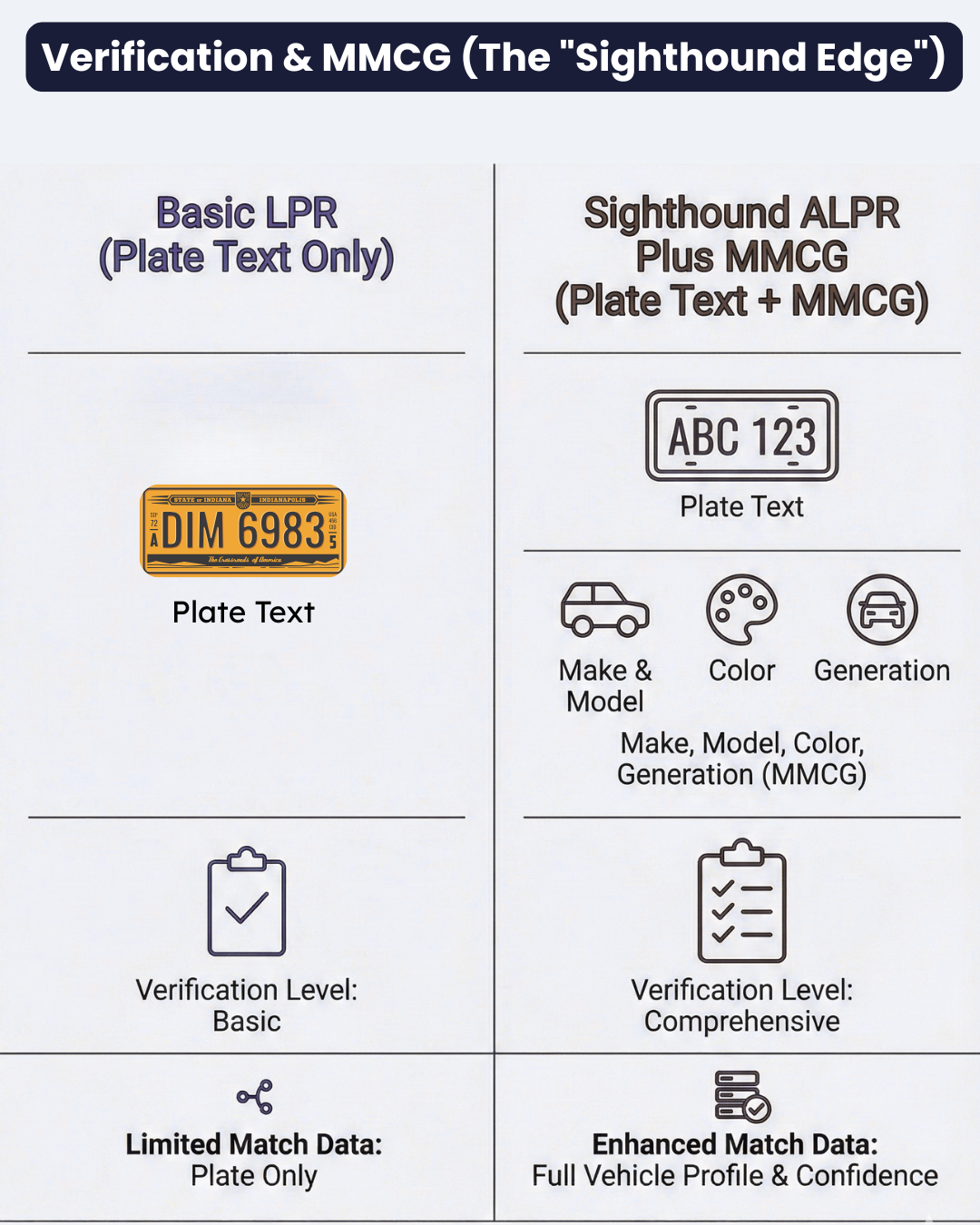
The software compares the visual evidence against the read. If the plate comes back as registered to a "Red Truck" but the visual analysis sees a "Blue Sedan," the system flags a "Mismatched Plate" event. This is invaluable for security operators.
Real-World Example 1: The "Ticketless" Parking Lot
Now that we understand the software, let's see it in action. The most common commercial application of ALPR today is in smart parking.
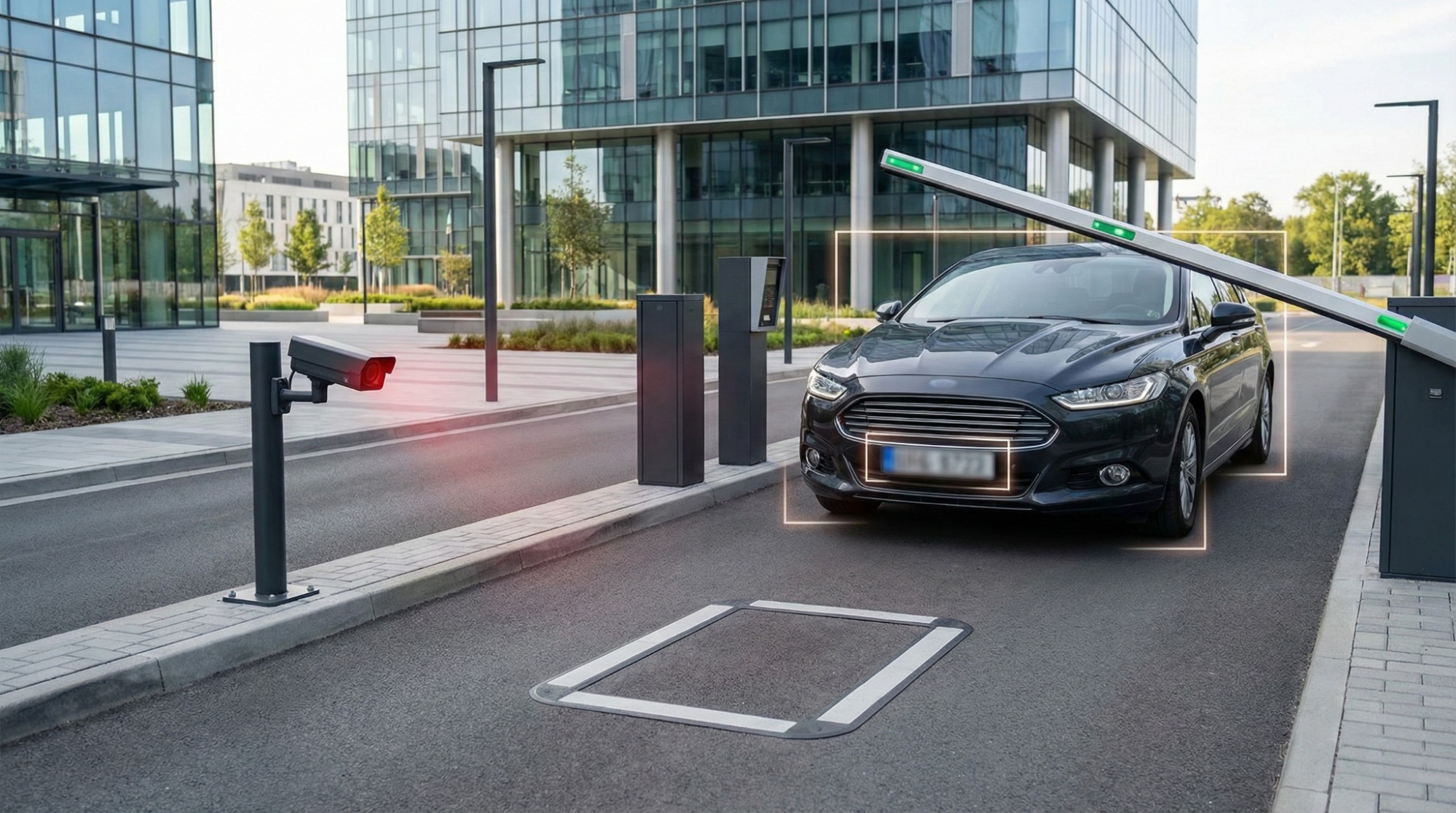
The Scenario
Imagine a large corporate campus or a mixed-use retail garage.
The Problem: Traditional paper ticket machines break down ("The bill acceptor is jammed!"). They slow down traffic (drivers fumbling for wallets). They are expensive to maintain (restocking paper, servicing mechanical arms).
The Solution: A "Frictionless" or "Ticketless" entry system where the license plate is the credential.
The Hardware Setup
Unlike the complex setups of the past, a modern ALPR parking lane is streamlined.
Camera: A 4MP IP Camera with an integrated IR (Infrared) Illuminator.
Positioning: Mounted on a pole 4-6 feet high, angled 20-30 degrees toward the lane. This low angle is critical to get a direct view of the plate.
Lighting: The IR illuminator is essential. At night, headlights can blind a standard camera. IR light reflects off the retro-reflective surface of the license plate, making it pop brightly against the dark background, even if the car’s headlights are on high beam.
Induction Loop: A wire loop buried in the asphalt detects the metal of the car and triggers the camera to start recording.
The Operational Workflow
Approach: A driver, let's call her Sarah, approaches the entry gate. She is a monthly subscriber.
Trigger: The ground loop senses her car. The camera snaps 5-10 frames in rapid succession.
Inference: The images are sent to a local Sighthound ALPR+ instance (running on a small server in the guard shack).
Processing:
The system reads the plate: 7XYZ999.
It cross-references the "Subscriber Database".
Match Found: Sarah’s account is active.
Action: The server sends a signal to the barrier gate controller.
Result: The gate arm lifts. Sarah never rolled down her window. The total time from trigger to gate opening was under 200 milliseconds.
Why MMCG Matters Here
Consider the "Shared Pass" problem. Sarah pays for one monthly spot. But she tries to cheat the system by letting her husband drive her car in, while she drives his car in using the same pass. With Sighthound ALPR+, the system tracks the vehicle type. If Sarah registered a "White Tesla", but the plate 7XYZ999 is seen entering on a "Red Ford Truck", the system can flag a "Vehicle Mismatch". The gate remains closed, or the account is flagged for audit. This protects revenue and assures compliance.
Real-World Example 2: The Police Patrol Cruiser
While parking requires consistency, Law Enforcement ALPR requires extreme resilience. This is the domain of Mobile ALPR.
The Scenario
Officer Miller is on patrol in a busy shopping district. His mission: locate stolen vehicles and find cars associated with active felony warrants. He cannot manually type in the license plate of every car he passes; there are thousands.
The Hardware Challenge
Mobile ALPR is one of the most difficult computer vision environments on earth.
Relative Velocity: The patrol car is moving at 35 mph. The oncoming traffic is moving at 45 mph. The "closing speed" is 80 mph. The camera shutter speed must be incredibly fast (1/2000th of a second) to freeze the image without motion blur.
Angles: The patrol car drives perpendicular to parked cars. The camera has only a split second to see the plate at a sharp 70-degree angle as the cruiser passes the aisle.
Vibration: Potholes and speed bumps shake the cameras constantly.
The Workflow
The Setup: Officer Miller’s cruiser is equipped with 3 roof-mounted cameras (aimed Left, Right, and Forward) and a ruggedised PC in the trunk.
The Scan: As he drives through the parking lot rows, the cameras are essentially "trawling" for data. They capture every plate in view—hundreds per minute.
The "Hit":
The system reads a plate: LMN-456.
It queries the local "Hotlist" (a database of stolen/wanted plates downloaded to the car at the start of the shift).
MATCH FOUND.
The Alert:
Officer Miller’s laptop screen flashes RED. An audible alarm sounds.
Crucial Step: The screen displays the captured image of the plate and the vehicle.
Alert Text: "STOLEN VEHICLE: SILVER TOYOTA CAMRY."
The "False Positive" Danger
In older systems, "phantom reads" were common. A picket fence might be read as "111-111." Or a plate LMN-456 (Stolen) might be misread as LMN-458 (Innocent). If Officer Miller pulls over an innocent family at gunpoint because of a bad read, it is a liability nightmare and a tragedy.
This is why Sighthound’s MMCG is a safety feature.
The Alert says: "Stolen Vehicle: Silver Toyota Camry."
Officer Miller looks at the parked car. It is a Red Honda Civic.
Immediate Decision: He knows the system misread the plate, OR the plate was swapped. But if it’s a read error, the visual mismatch allows him to de-escalate immediately. He verifies the image on the screen before taking action.
Conversely, if he sees a Silver Camry, his confidence in the stop is absolute. The Vehicle Analytics provides the "second opinion" that keeps officers and citizens safe.
Hardware Agnostic: Why the Software Matters Most
For years, the ALPR market was dominated by hardware manufacturers who sold "Black Box" cameras. You had to buy their camera, use their processor, and use their software. If you wanted to upgrade the software, you had to climb a ladder and replace the camera.
The Paradigm Shift Sighthound operates on a Hardware Agnostic philosophy.
Use Existing Cameras: Do you already have 50 IP cameras installed in your parking garage? You don't need to rip them out. Sighthound ALPR+ can ingest the RTSP video streams from those existing cameras and process them on a central server.
Edge vs. Cloud:
Edge Processing: Run the software on a local NVIDIA Jetson or a standard Linux server on-site. This is best for low latency (opening gates) and privacy (images never leave the network).
Cloud Processing: Send images to the Sighthound Cloud API. This is best for mobile apps or low-volume sites where you don't want to manage servers.
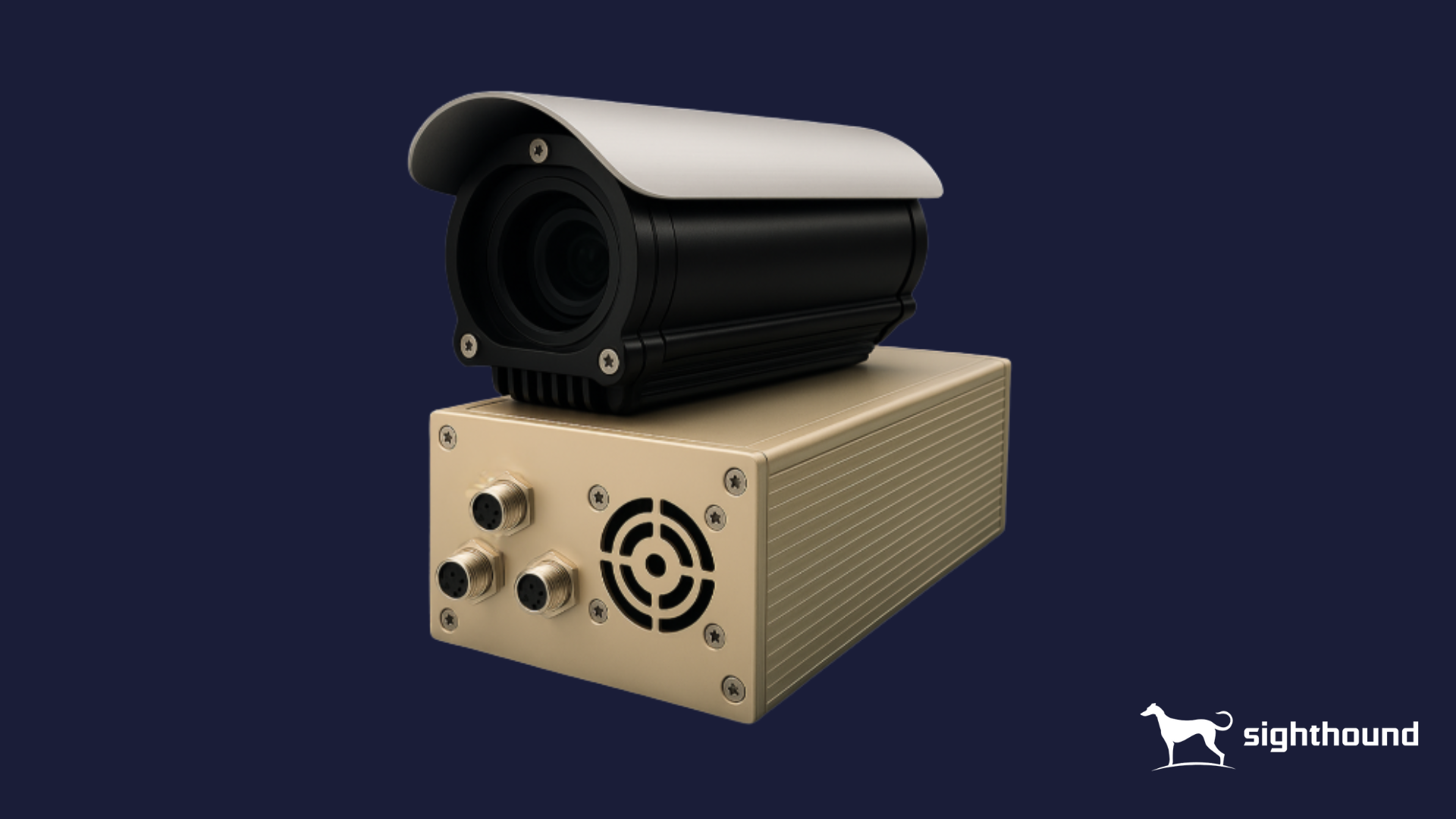
This flexibility empowers developers. You are no longer locked into a single hardware vendor’s ecosystem. You choose the best camera for the optics, and use Sighthound for the intelligence.
Sighthound ALPR+ in Parking Lot Applications
Sighthound ALPR+ represents a huge leap in license plate recognition technology. More than just a plate reader, ALPR+ is a fully integrated, AI-powered vehicle intelligence platform. It is built to deliver exceptional accuracy, real-time insights, and actionable data, right at the edge.
What sets ALPR+ apart is its ability to go beyond characters on a plate. By combining cutting-edge computer vision with deep learning models, ALPR+ provides a comprehensive understanding of each vehicle it encounters.
ALPR+ Features
Make, Model, Colour, and Generation (MMCG) Recognition: Accurately identifies detailed vehicle attributes for better filtering, search, and analytics.
License Plate Detection Across 100+ Countries: Built-in localisation makes it ideal for global deployments and international operations.
Real-Time Vehicle & Object Tracking: Continuously monitors vehicle movement, enabling proactive security and traffic flow management.
Edge Deployment with GPU Acceleration: Enables fast, offline operation with reduced latency and minimal bandwidth usage.
Flexible API Integrations: Easily connect with existing VMS, access control, tolling, or smart city platforms.
Privacy Compliance and Redaction Options: Supports privacy-focused operations with built-in redaction and encryption protocols.
Smart ALPR That Works Where You Need It
As smart cities continue to evolve, their need for smart tools that save time, reduce errors, and support staff will also grow. Computer vision is one of those tools, and when deployed thoughtfully, it becomes a silent partner in delivering safer, more efficient care.
Want to see AI-powered LPR in action? Explore Test Drive ALPR+ Now For Free.
For business opportunities, explore our Partner Program today.