
TL;DR
Vehicle generation is the body-style era of a make and model, such as a ninth-generation versus tenth-generation Honda Civic. Paired with license plate recognition, it gives reviewers a practical question to ask: does the vehicle match the plate? Sighthound Retriever, powered by ALPR+, records the plate plus make, model, color, and generation (MMCG). That lets parking and law-enforcement teams cross-check reads and spot exceptions worth a second look. (69 words)
This article is for informational purposes and is not legal advice. Consult your organization’s counsel for guidance specific to your jurisdiction and workflow.
Key Takeaways
Vehicle generation identifies the body-style era of a make and model, which narrows a vehicle description further than make, model, and color alone.
Comparing the generation in a plate read against the vehicle on file gives reviewers a simple test of whether the vehicle matches the plate.
A generation mismatch is a reason to review the record, and most mismatches have ordinary explanations like a replaced car or an outdated permit.
When rain, distance, angle, or darkness makes a plate unreadable, the vehicle description still gives reviewers something concrete to work with.
Generation is a qualitative cross-check that supports human review and never proves who owns or drives a vehicle.
Agencies and operators decide how mismatches are handled, who reviews them, and what happens next, through their own written policies.
What is vehicle generation in license plate recognition?
Vehicle generation is the body-style era of a make and model. Manufacturers redesign a model every several years, and each redesign is a generation. A 2014 Honda Civic and a 2018 Honda Civic share a make and model, but they belong to different generations and look different from the front and rear.
License plate recognition reads the plate. Make, model, color, and generation (MMCG) recognition describes the vehicle carrying it. Generation is the most specific of the four attributes because it separates vehicles that would otherwise share the same description.
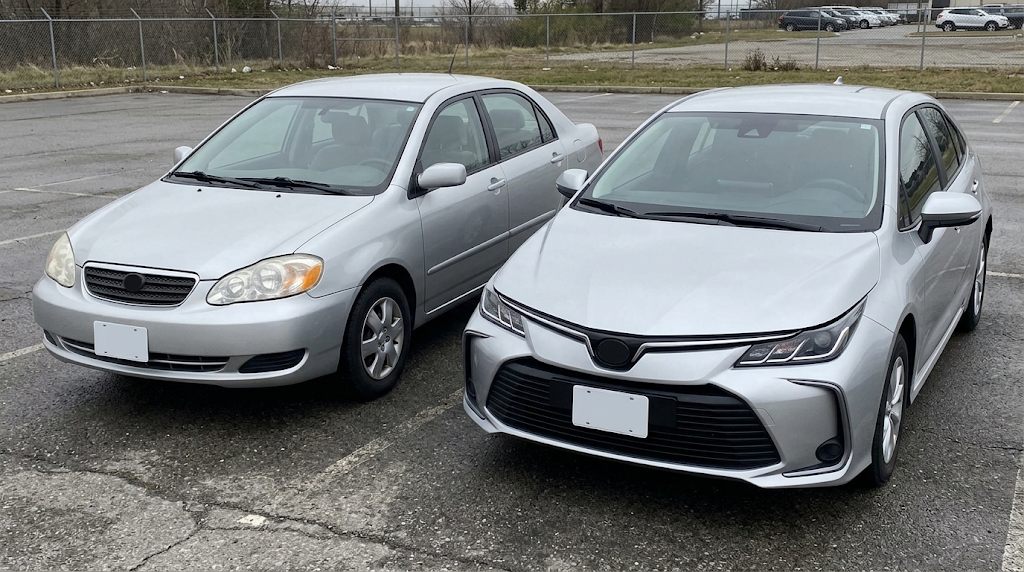
Two silver sedans parked side by side, showing an older and newer body style
If you want the fundamentals of how vehicle classification models work, start with Vehicle Classification Models Explained with MMCG. This post covers one practical use: checking whether the vehicle matches the plate.
Why does a plate read need vehicle context?
A plate read is a string of characters. On its own, it can’t tell you whether the plate belongs on the car it’s attached to. Plates get moved to new vehicles, permits expire, and reads can be partial in poor conditions.
Vehicle context gives the reviewer a second, independent description to compare. Color alone is weak, because thousands of vehicles share it. Make and model are stronger. Generation narrows it further, and it’s the attribute most likely to catch a quiet change, like an owner who replaced their car with a newer version of the same model and kept the old plate.
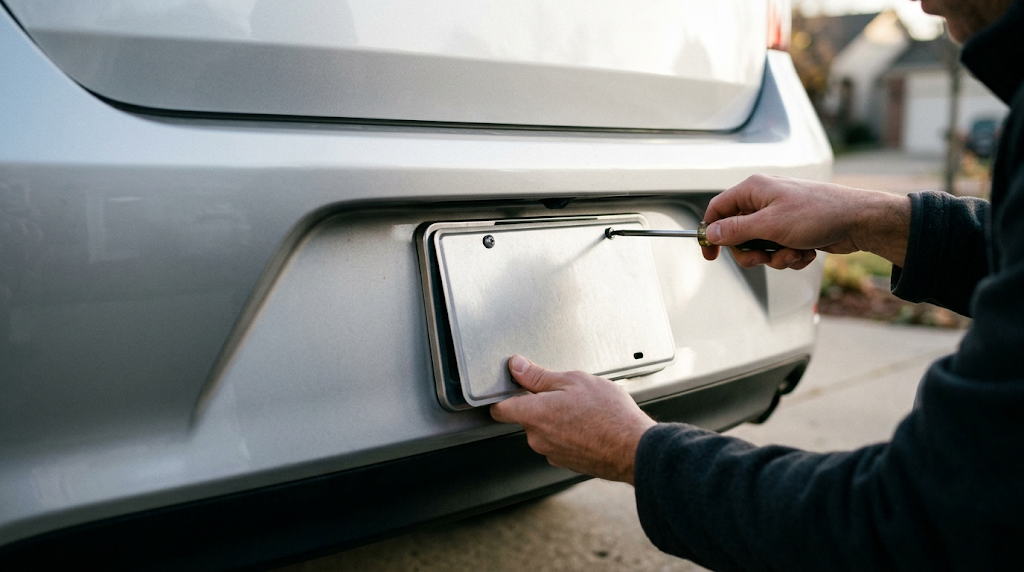
Hands mounting a license plate onto the rear bumper of a newer silver sedan.
How does a generation cross-check work in a parking review?
Here’s a common exception at a permit-controlled garage.
A monthly permit is registered to a silver ninth-generation Honda Civic. One morning, the entry camera reads the permitted plate. The vehicle record shows a silver Honda Civic, but in the later body style.
Make, model, and color all match. Without generation, nothing in the record stands out. With generation, the vehicle in the lane doesn’t match the vehicle on file, and the event goes to a reviewer.
| Attribute | Permit on file | Vehicle in lane | Match? |
|---|---|---|---|
| Plate | Permitted plate | Permitted plate | Yes |
| Make | Honda | Honda | Yes |
| Model | Civic | Civic | Yes |
| Color | Silver | Silver | Yes |
| Generation | Ninth generation | Later generation | No |
In most cases like this one, the explanation is ordinary. The permit holder bought a newer Civic, moved their plate, and didn’t update their permit. The reviewer contacts the holder, updates the record, and the exception closes. Less often, the mismatch points to a misread or a plate that doesn’t belong on that vehicle, and staff follows the garage’s own process.
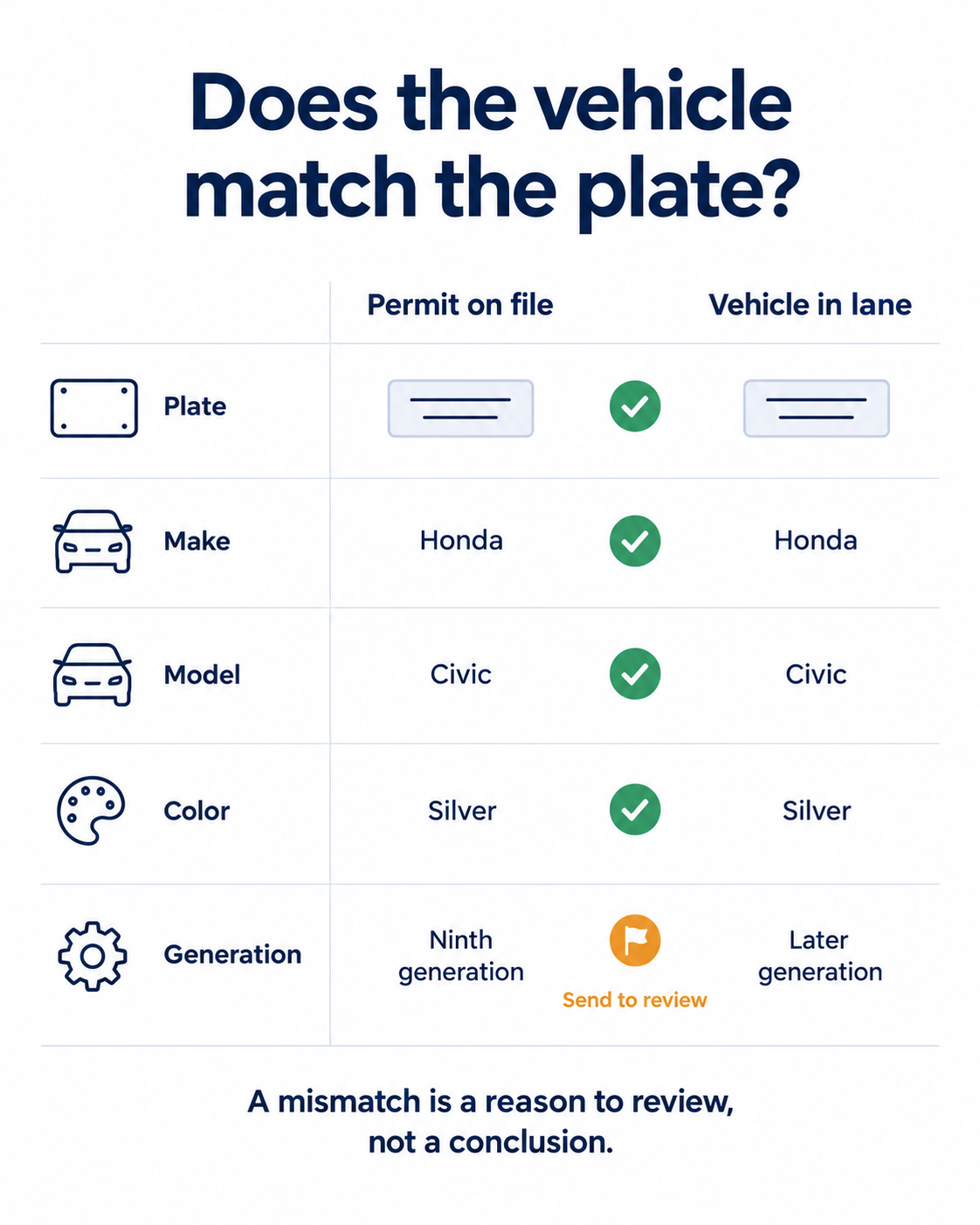
Comparison chart showing plate, make, model, and color match but generation differs.
Generation also helps when the plate itself doesn’t read cleanly. A rain-streaked plate at a steep angle may come back partial or blank. The vehicle record can still describe a silver later-generation Civic, which gives the reviewer a short list of permits to check by hand instead of nothing at all.
What should reviewers do when the vehicle doesn’t match the plate?
Treat a mismatch as a prompt to review, not a conclusion. A checklist keeps reviews consistent across staff and shifts:
Re-check the read. Look at the captured image and confirm the plate characters and the issuing jurisdiction.
Compare the full description. Check make, model, color, and generation against the record, and note which attributes differ.
Look for an ordinary explanation. Consider a replaced vehicle, a permit that was never updated, a rental, or a loaner.
Check the image conditions. Distance, angle, glare, darkness, and weather all affect what a camera captures, so note anything that limits the image.
Follow your written policy. Your policy decides who contacts the holder, what gets logged, and when an exception escalates.
Record the outcome. Note whether the record was updated, the exception closed, or the case was escalated, so patterns show up over time.
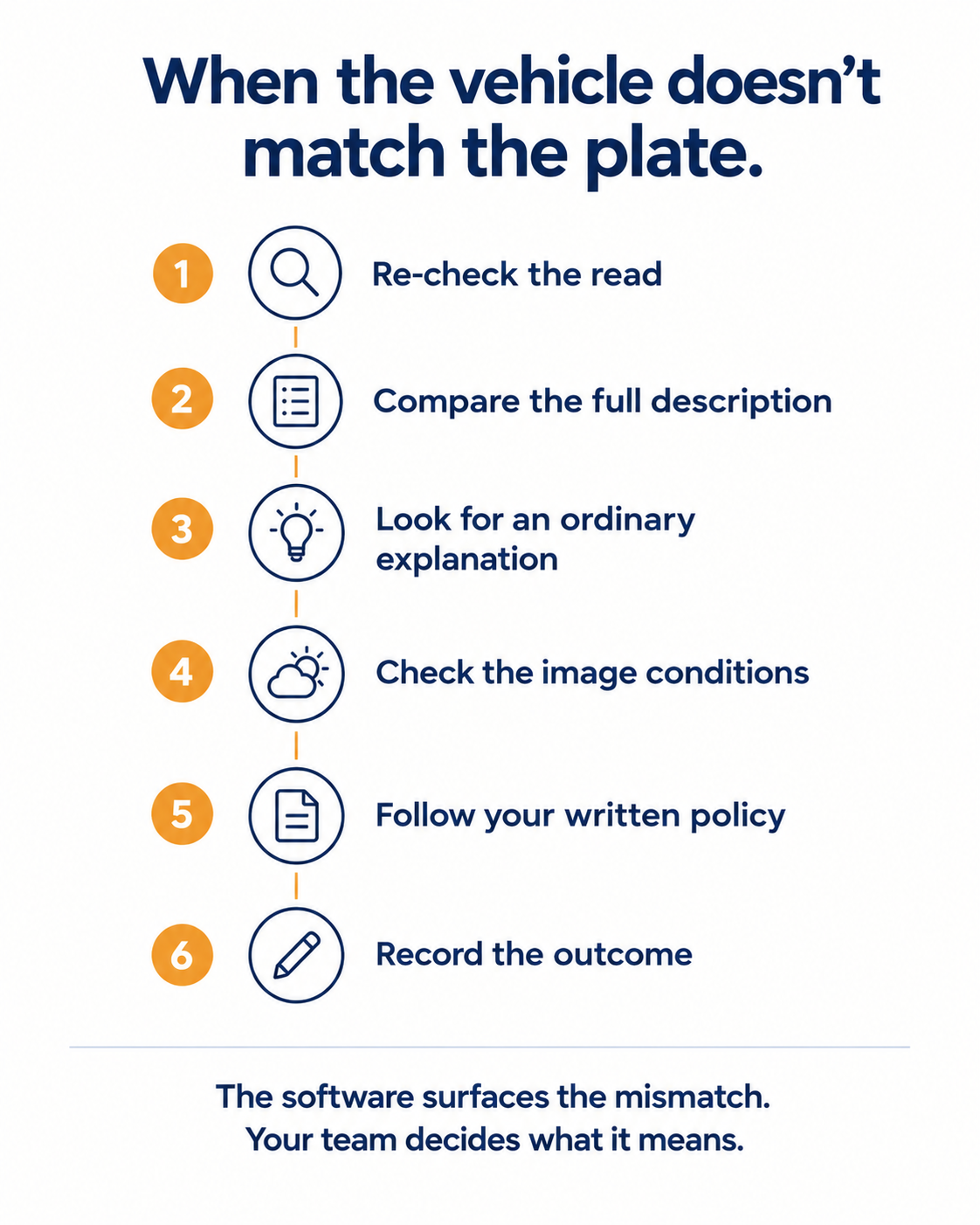
Six-step checklist for reviewing a vehicle that does not match its plate.
The software surfaces the mismatch. Your team, working under your policy, decides what it means.
How does this apply to law-enforcement ALPR alerts?
The same cross-check applies when an automatic license plate recognition (ALPR) alert fires in a law-enforcement program. The International Association of Chiefs of Police (IACP) has published principles for responsible ALPR use. Among other topics, they address verification and documented, authorized use. Read the joint law-enforcement principles and the IACP ALPR resource page for the source text.
An ALPR read identifies a vehicle, not a person. An alert doesn’t establish who was driving, prove guilt, or establish probable cause. It’s an investigative lead. Staff should verify the plate, the jurisdiction, the record status, and the relevance of the alert before acting. Generation can add one more qualitative check to that verification, and your agency’s policy governs the rest.
Where does generation stop being useful?
Generation is a cross-check, and it has limits worth stating plainly.
It doesn’t identify people. It describes a vehicle.
It doesn’t prove a plate belongs to a vehicle. A match is consistent with the record, and a mismatch is a reason to look closer. Neither one settles anything alone.
Some redesigns are subtle. Mid-cycle refreshes and similar-looking body styles can be hard to tell apart from a single image.
Image quality matters. The same conditions that degrade a plate read also affect how much vehicle detail a camera captures.
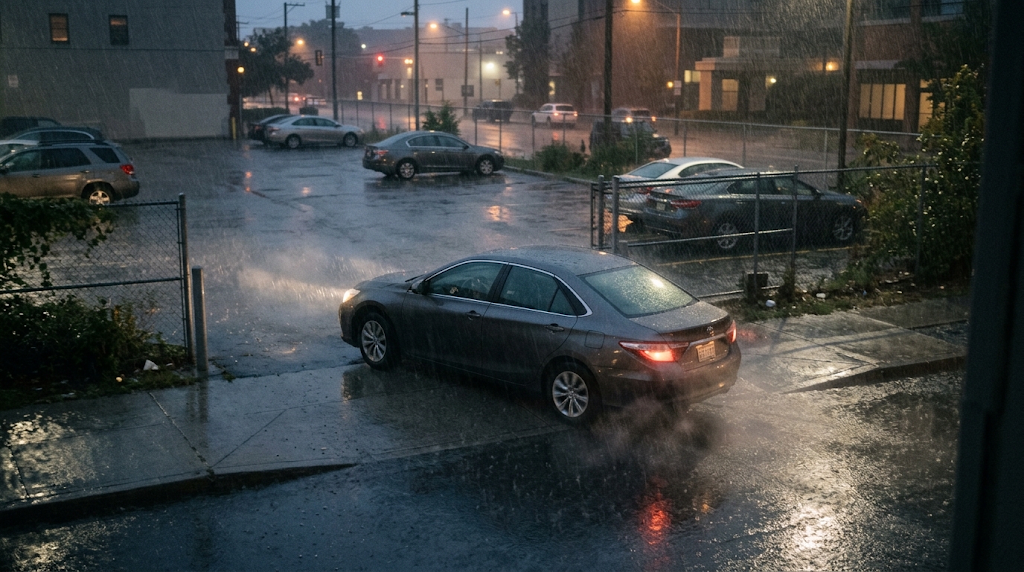
Gray sedan entering a parking lot in rain with headlight glare and wet pavement.
Before relying on any recognition system, test it on your own footage, with your plate mix, lighting, and camera angles. That tells you more than any general claim.
How Sighthound Retriever helps
Sighthound Retriever, powered by ALPR+, records the plate plus make, model, color, and generation in each vehicle record. That gives reviewers a direct way to ask whether the vehicle matches the plate. When rain, dust, distance, angle, or darkness keeps a plate from reading cleanly, the record can still describe the vehicle.
Retriever runs on your own hardware and doesn’t require a cloud connection. Data stays under your policy, and sharing and export are your choice. Webhooks deliver events to the systems your team already uses for review. Setup doesn’t involve SSH sessions or config-file editing.
Sighthound is tooling software. Compliance depends on your environment, policies and controls. See it run on your own image or Request a technical fit review
FAQs
-
MMCG stands for make, model, color, and generation. It describes the vehicle carrying the plate, not just the plate characters. Generation is the most specific of the four because it separates older and newer body styles of the same model.
-
No. A model year is a single year, while a generation covers several model years that share one body design. A model is usually redesigned every several years, and each redesign starts a new generation. Two cars a few model years apart can belong to the same generation or to different ones.
-
No. A mismatch is a reason to review the record, not proof of anything. Common explanations include a replaced vehicle, a permit that was never updated, a rental, or a loaner. Your team’s written policy decides what happens next.
-
No. Generation describes a vehicle, not a person. A plate read or a vehicle description doesn’t establish who was driving or who owns the car. Treat it as one input to a human review.
-
Rain, dust, distance, angle, or darkness can leave a plate partial or unreadable. The vehicle record can still describe the make, model, color, and generation, which gives reviewers something concrete to check by hand.