
What is an ALPR Access Control System & How Does It Work?
At most modern parking gates, no one flashes an ID badge or rolls down a window anymore. The barrier lifts on its own, almost like it knows who’s behind the wheel. And in a sense, it does, thanks to a small camera, a neural network, and a lot of math working together in real time.
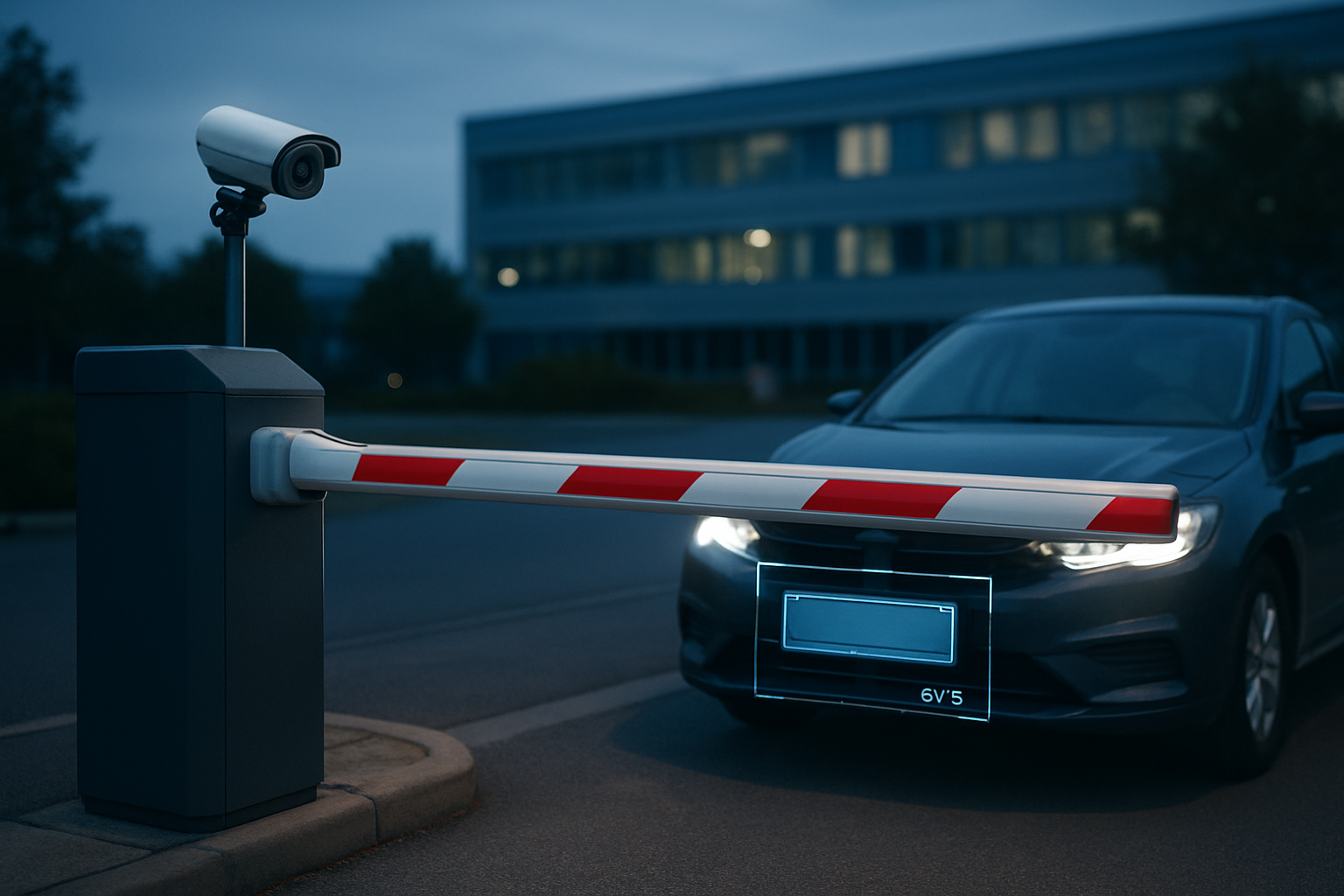
License Plate Recognition (LPR), also known as Automatic License Plate Recognition (ALPR), has quietly become the backbone of vehicle access control. From corporate campuses and logistics yards to city parking garages, the humble plate has become a digital key. It’s faster than RFID cards, cheaper than physical tags, and (when tuned right) nearly frictionless for drivers. But like any AI-powered system, what looks effortless on the surface hides layers of complexity, engineering trade-offs, and real privacy considerations underneath.
Let’s unpack how it works, what it can do, and what to watch out for as more cities, businesses, and property owners rely on “smart gates” for everyday security.
The Big Idea
In a traditional setup, vehicle access is managed by guards, cards, or barcodes. Someone checks if a car is allowed in, and the gate opens. LPR systems automate that entire process.
A camera points toward the vehicle’s approach lane, waiting for a clear view of the front or rear plate. As a car enters the frame, the camera snaps an image (or grabs a frame from a video stream). That image is then processed by computer vision software trained to recognize plate shapes, extract alphanumeric characters, and match them against an approved list. If there’s a match, the gate controller receives a signal to lift the barrier.

What makes this fascinating is how quickly it happens. The driver barely notices the exchange, but under the hood, the system just ran through multiple AI stages: detection, segmentation, recognition, and validation.
This combination of optics and intelligence is what makes LPR such an effective access control technology. It doesn’t just “see”, it understands what it’s seeing.
How License Plate Recognition Works
1. Capture & preprocessing
A dedicated LPR/ALPR camera (often IR-illumination equipped) takes a still or video of the oncoming vehicle’s licence plate.
The image must meet key constraints: proper angle, sufficient resolution, minimal blur, correct exposure, and minimal glare.
2. Plate localisation & segmentation
The software locates the plate area within the image (“localisation”).
Then it segments each character (“segmentation”) to isolate the alphanumerics.
3. Optical Character Recognition (OCR)
The system reads the characters from the plate and converts them into text (plate number).
The software may also parse additional metadata: time stamp, lane ID, direction, vehicle MMCG, if advanced.
4. Matching & decision logic
The extracted plate number is compared against one or more databases: authorised list, blacklist, guest list, visitor plate, etc.
If a match is positive (authorised), the gate opens; if negative, it triggers a deny or secondary verification.
5. Integration & action
The decision is sent to downstream access-control hardware: gate/barrier, bollard, garage door, boom.
The event is logged (plate number + time + image) for auditing, analytics, and future reference.
6. Analytics and operational insight
Beyond simple access control, record-keeping enables patterns of usage, dwell times, repeat visitors, land ane bottlenecks.
The system may integrate with parking-management, reservation systems, or visitor-pre-registration platforms.
Why the Timing of Processing Matters
Latency is one of the hidden make-or-break factors in vehicle access control. When cars queue up at a barrier, even a one-second delay per vehicle adds up to frustration. That’s where edge computing becomes critical.
Instead of sending video to the cloud for recognition, modern systems like Sighthound’s ALPR+ running on a Compute Node perform all processing locally, right at the camera or gate. This setup reduces response time dramatically and avoids sending sensitive footage across the network.
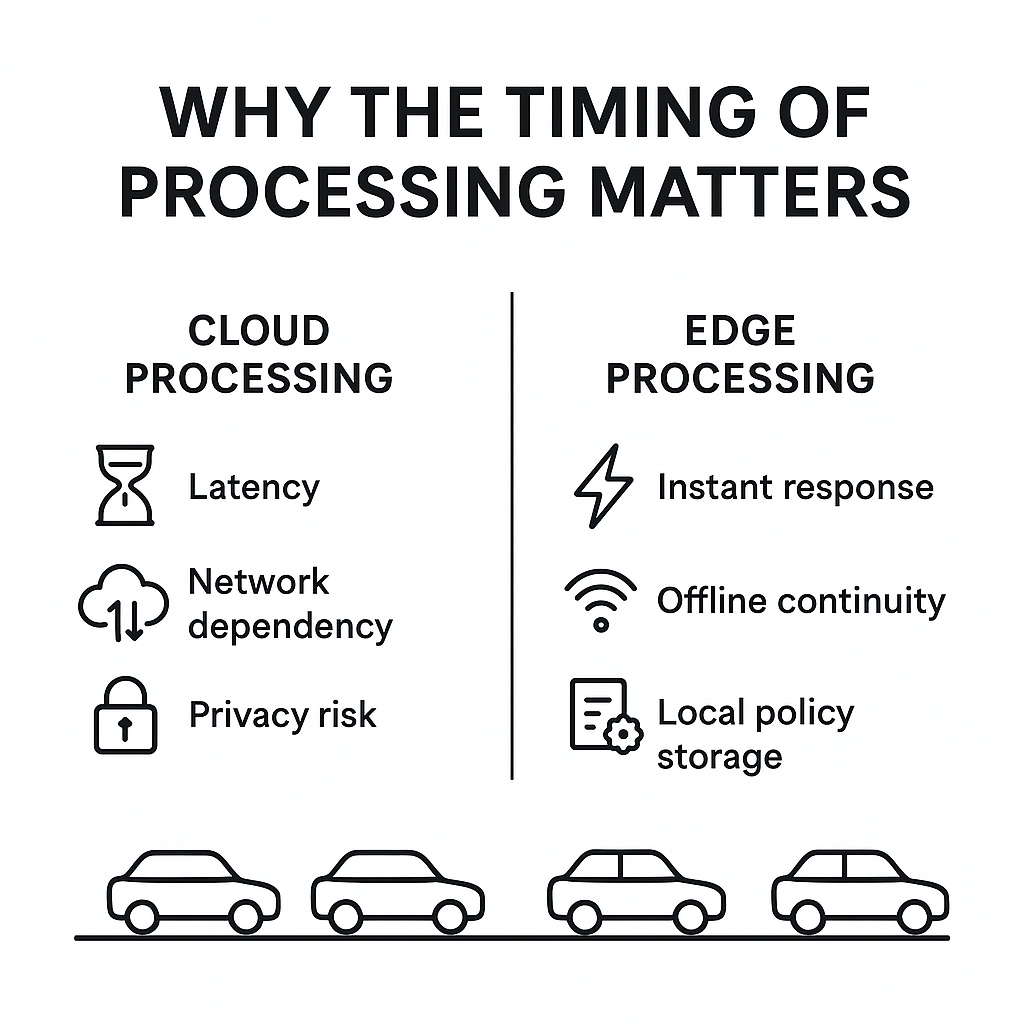
Edge-based recognition also allows the system to keep working if the internet goes down. Each Compute Node stores its local lists, logs, and policies. Once connectivity returns, it syncs back to a central server or cloud dashboard. It’s a practical mix of speed, reliability, and privacy, especially important for city deployments or parking operators that can’t afford downtime.
Real-World Uses You See Every Day
Residential or condo parking: Residents register their vehicle plates once; on subsequent visits, the barrier opens automatically.
Office or corporate campus access: Cars of employees or authorized visitors are recognised; unknown plates trigger guest check-in.
Commercial parking/ valet lots: Plates are read on entry and exit, no ticket needed, faster flow, fewer attendants.
Secure facilities/ logistics yards: Vehicle access is strictly controlled by plate list + time-windows + vehicle profile checks.
What unites all these use cases is the same principle: remove friction for authorized users, enforce accountability for everyone else.
Beyond Access
Every vehicle event captured by an LPR system creates a data trail: plate number, timestamp, lane, direction, and sometimes even make, model, and color (a capability known as MMCG).
Over weeks, that data becomes a rich operational map: peak arrival times, average dwell durations, recurring visitors, and suspicious patterns.
For parking operators, those insights translate into smarter pricing or staffing.
For security teams, they offer a way to trace incidents quickly.
For city planners they provide evidence-based inputs to manage traffic flow or parking availability.
In other words, LPR is not just about opening gates. It’s about seeing patterns in vehicle behavior that were previously invisible.
The Privacy Problem Everyone’s Talking About
LPR systems don’t just manage parking lots anymore. They’ve become city-wide surveillance tools, sometimes without much oversight. Law enforcement, toll agencies, and private companies now operate tens of thousands of cameras, collecting billions of plate reads per year.
That scale raises serious privacy questions. Even if plate numbers are technically “public,” aggregating them across time reveals movement patterns that feel deeply personal. Who visits which neighborhood, how often, and when, that’s data most people don’t expect anyone to have.
Organizations deploying ALPR must therefore balance utility with restraint. Data retention policies, encryption, anonymization, and audit logs are essential. In some regions, regulations now cap how long plate data can be stored or shared.
Sighthound’s approach with edge-based Compute Nodes addresses this directly: process locally, store minimal data, and only transmit what’s needed.
What Makes a Good LPR Access-Control System
If you’re evaluating options, think of an LPR system as three layers working in sync: the camera, the recognition engine, and the integration layer.
The camera’s job is to capture the plate cleanly, with crisp contrast, minimal motion blur, and readable characters at 30–40 mph.
The recognition engine turns that image into text and confidence scores.
And the integration layer decides what happens next: open the gate, deny entry, trigger alerts, or log events.
The best systems make it easy to act on that information. They integrate with existing parking systems, security dashboards, or building access APIs. They let you configure allow-lists, visitor rules, and schedules without needing a developer.
And they evolve. Good vendors constantly update their OCR models for new plate designs, regional fonts, and character variations. That ongoing support matters far more than raw accuracy numbers on a spec sheet.
Cost, Scalability, and Return on Investment
Installing an LPR access-control system involves more than buying a camera. There’s the software license, gate integration, network setup, and maintenance. Entry-level deployments can start under $3,000 for a single lane; enterprise-grade systems with multiple cameras, edge processors, and integrations can reach $15,000 to $25,000 per gate. The real question is ROI.
For busy parking facilities, automation can save thousands per month in labor.
For gated communities, it eliminates lost remotes and visitor queues.
For logistics yards, it improves throughput and reduces theft or tailgating.
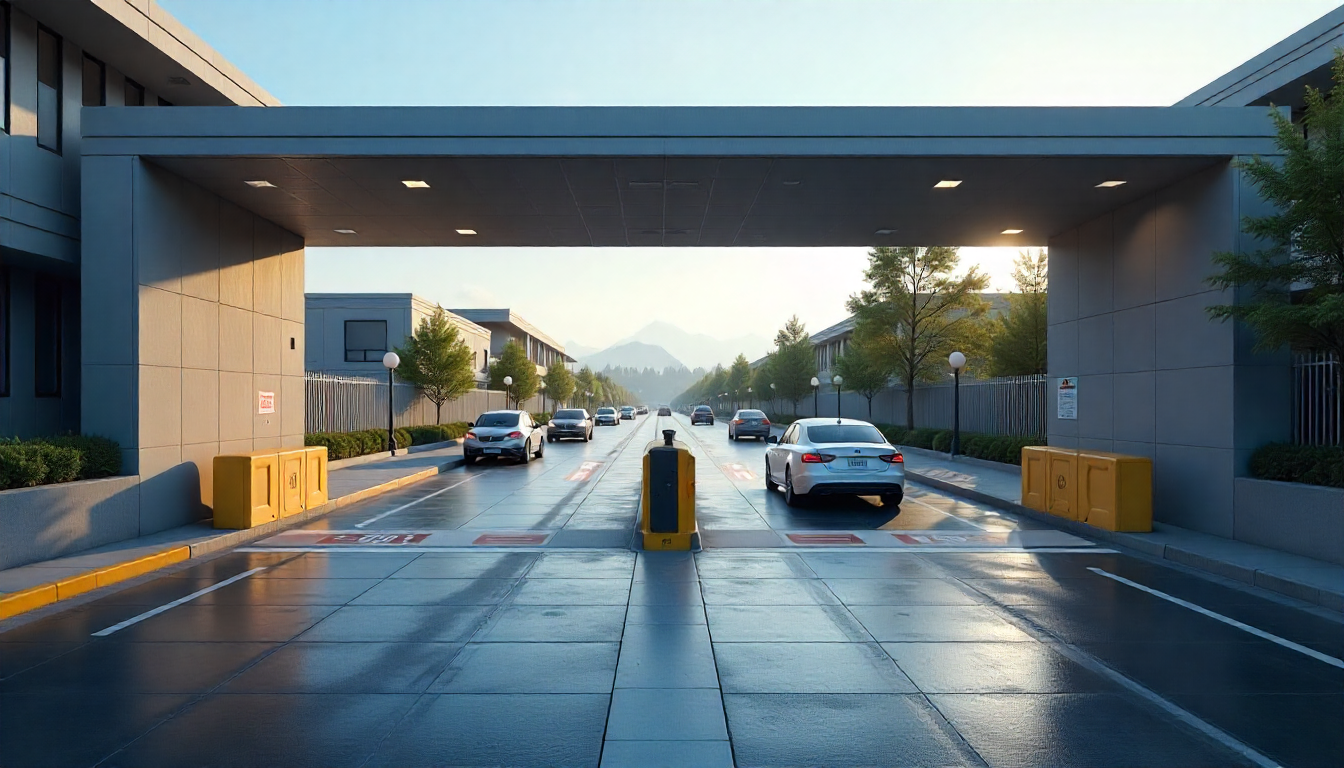
The scalability factor is equally critical. Systems built around modular compute hardware, like Sighthound’s Compute Node architecture, allow you to start small and expand lane by lane. Each node can process multiple RTSP streams independently, so adding capacity doesn’t require a full redesign.
When planned right, LPR quickly pays for itself, not just in cost savings, but in smoother operations and better data visibility.
What Happens When Automation Fails
Even the smartest gate can misread a plate. That’s why every good deployment includes human fallback. If a vehicle isn’t recognized, an attendant screen or intercom lets staff verify manually. The event is logged, the plate corrected, and the system learns from it.
This human-machine partnership is where the best access-control operations live. Automation handles the 95% of routine events; humans handle the edge cases. The goal is to make a human’s time matter more.
A Day in the Life of a Smart Gate
For example, A delivery truck approaches a logistics hub. As it nears the gate, a small black camera mounted beside the barrier snaps a frame of the plate. Inside the Compute Node, Sighthound’s ALPR+ model runs a detection routine, extracts the characters, and checks them against the day’s manifest. It finds a match: “Vehicle ID #2387, 9:02 AM appointment.”

In 400 milliseconds, the system signals the controller: open gate. The barrier lifts. The truck drives through. No one touched a badge reader. No one verified manually. Yet every detail is logged, timestamp, plate image, lane ID, ready for audit or analytics.
That’s the promise of intelligent vehicle access. Not just faster gates, but smarter movement.
What’s Next for LPR and Edge AI
With edge processors like NVIDIA Orin and software pipelines like Sighthound IO, Compute Nodes can now perform multi-camera analytics simultaneously: vehicle classification, speed estimation, and even object detection for safety hazards.
For example, a parking garage can automatically count available spots, detect blocked exits, or identify expired permits, all in real time. Municipal fleets can combine LPR with environmental sensors to track usage and emissions. The technology is moving from “read and log” to “observe and act.”
The Gate Is Just the Beginning
License Plate Recognition has evolved from a niche law-enforcement tool to a mainstream automation layer for parking, access control, and mobility. When done right, it’s invisible: the gate opens, traffic flows, and data works quietly in the background.
When done poorly, it’s frustrating, invasive, or unreliable. The difference lies in careful design: the right cameras, well-trained AI, edge-based processing, and transparent data handling.
Sighthound’s approach, combining ALPR+ software with edge-ready Compute Nodes, represents where this field is heading: powerful, local, privacy-aware automation that makes every gate smarter and every vehicle entry safer.
As cities grow and mobility patterns evolve, that balance of convenience and control will define how intelligent infrastructure earns public trust. The technology already knows your plate; what matters now is how responsibly it’s used.
Want to learn more about Sighthound Compute Node? Visit this page: https://www.sighthound.com/products/hardware
You can also try out our online demo for Sighthound ALPR+ here: https://www.sighthound.com/products/alpr/demo
FAQ Section:
-
The system captures an image of a vehicle’s license plate, processes it through OCR algorithms, and compares it to a database of authorized or blacklisted vehicles. When a match is found, it sends a signal to open the gate or barrier, all within milliseconds.
-
Edge computing moves video analysis from the cloud to local devices like the Sighthound Compute Node. This reduces latency, minimizes bandwidth costs, and keeps sensitive plate data private by processing it on-site instead of transmitting it externally.
-
Because ALPR captures vehicle movement data, improper storage or sharing could expose personal location histories. Responsible deployments mitigate this risk through encryption, limited data retention, and local (edge) processing to prevent unnecessary cloud exposure.